
AI solves the hearing aid cocktail party problem
A researcher uses machine learning to help hearing aids isolate single voices in noisy rooms in real-time.
Published on July 19, 2026
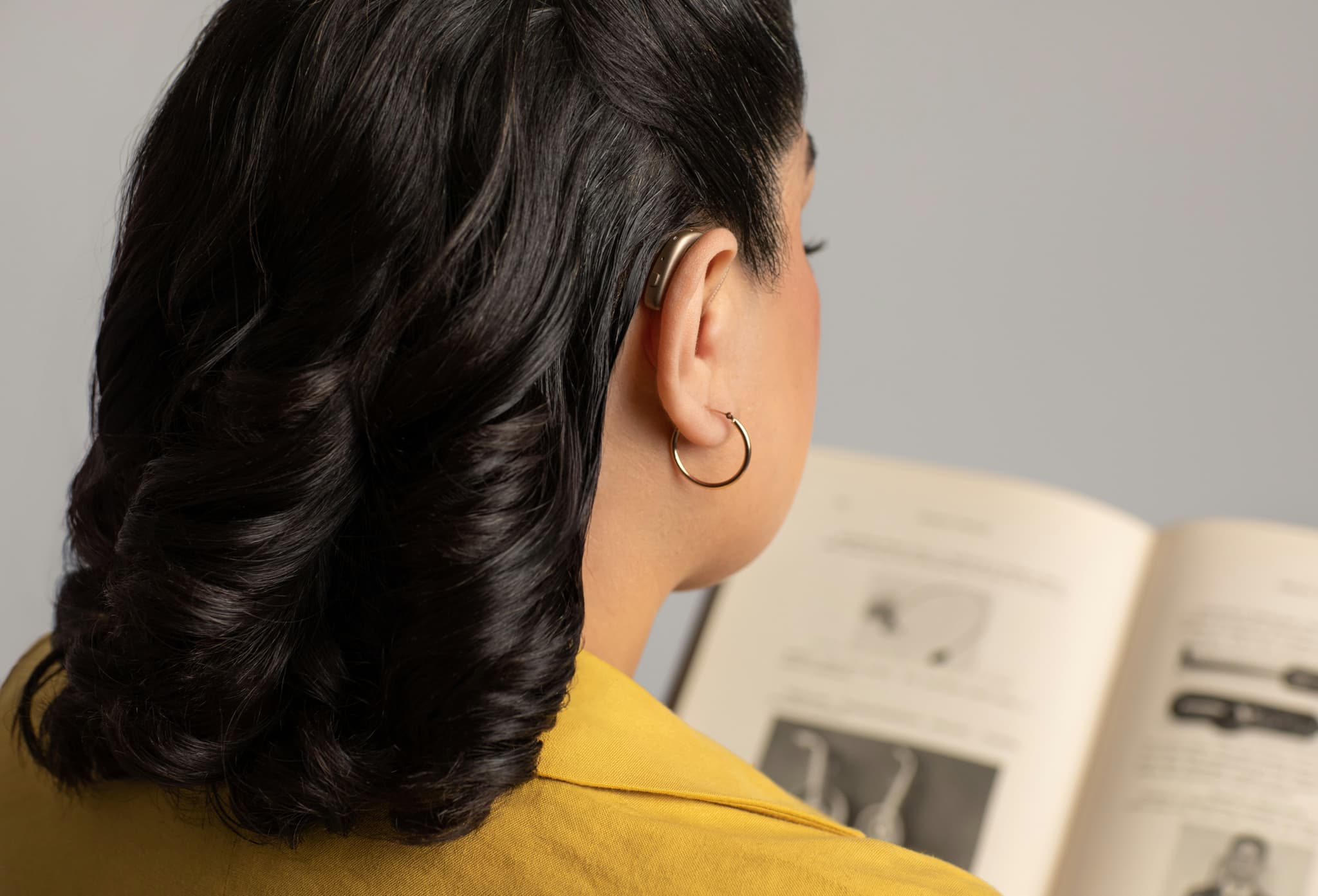
© GN Group - Unsplash

Team IO+ selects and features the most important news stories on innovation and technology, carefully curated by our editors.
For decades, hearing aid users have faced a frustrating barrier in social settings. In crowded restaurants or busy streets, traditional hearing aids amplify all background sounds indiscriminately. This issue, known as the "cocktail party problem," makes it nearly impossible to follow a single conversation, leading to social isolation and cognitive exhaustion.
Luan Fioro, a PhD researcher at the Eindhoven University of Technology (TU/e), developed an AI-powered solution. By applying real-time machine learning algorithms, the scientist developed a system that mimics the human brain's natural ability to isolate a single speaker. This innovation marks a major shift in auditory technology, moving from simple sound amplification to intelligent, context-aware audio processing.
How does the brain filter out noise?
The term "cocktail party problem" was first coined by scientist Colin Cherry in 1953. It describes the human auditory system's remarkable ability to focus on one voice while filtering out competing background noise. The brain achieves this feat by analyzing spatial cues, pitch differences, and temporal patterns.
However, replicating this biological process in artificial hearing systems has proven incredibly difficult. Traditional hearing aids rely on digital signal processing techniques such as beamforming and spectral subtraction. While these methods work well in quiet environments, they struggle in complex, dynamic acoustic settings where multiple people speak at once.
Because traditional algorithms cannot distinguish between a target speaker and background chatter, they often amplify the noise along with the speech. This technological bottleneck has left hearing aid users struggling in social environments for over seventy years. The inability to solve this problem has remained the primary reason why many individuals refuse to wear their hearing devices in public.
A smart three-step architecture
To overcome this challenge, Fiorio’s doctoral thesis proposes a structured approach that divides audio processing into three distinct stages: acoustic environment classification, beamforming/source tracking, and speech enhancement.
First, the system identifies the user's acoustic surroundings, such as a quiet office or a loud restaurant. Next, it tracks the target speaker's physical location in real time. Finally, deep neural networks isolate and enhance the target speech while actively suppressing background noise. This three-step process allows the hearing aid to adapt dynamically to changing environments.
By breaking down the complex auditory scene into manageable computational tasks, the algorithm can focus processing power where it is needed most. This targeted approach ensures that the most critical speech signals are preserved and clarified.
The road to commercial reality
Transitioning this cutting-edge research from a university laboratory to a commercial product requires overcoming significant physical constraints. Commercial hearing aids operate on incredibly tight power budgets, typically consuming only 1 to 3 milliwatts.
They also have extremely limited memory, typically between 512 kilobytes and 2 megabytes. To make these machine learning algorithms viable for daily use, engineers must compress the models through quantization and pruning. This process reduces the computational footprint without sacrificing performance. The next step involves deploying these compressed models onto specialized, low-power silicon chips, such as embedded field-programmable gate arrays or dedicated neural processing units. Once the hardware is optimized, manufacturers must conduct extensive clinical trials with hearing-impaired users.
Fiorio will continue his work on hearing aids at GN Hearing, which he joined as a research scientist.