
A plea for Europe to go beyond the single Silicon Valley myth
At the TU/e's opening of the academic year, the message was for Europe to build connected, specialised ecosystems
Published on September 1, 2026
Silvia Lenaerts

Bart, co-founder of Media52 and Professor of Journalism oversees IO+, events, and Laio. A journalist at heart, he keeps writing as many stories as possible.
Europe cannot afford to search for a single, monolithic Silicon Valley. Instead, the continent’s path to technological sovereignty lies in cultivating a distributed network of specialised, high-performing regional ecosystems, each excelling at what it does best, while linking directly with the others.
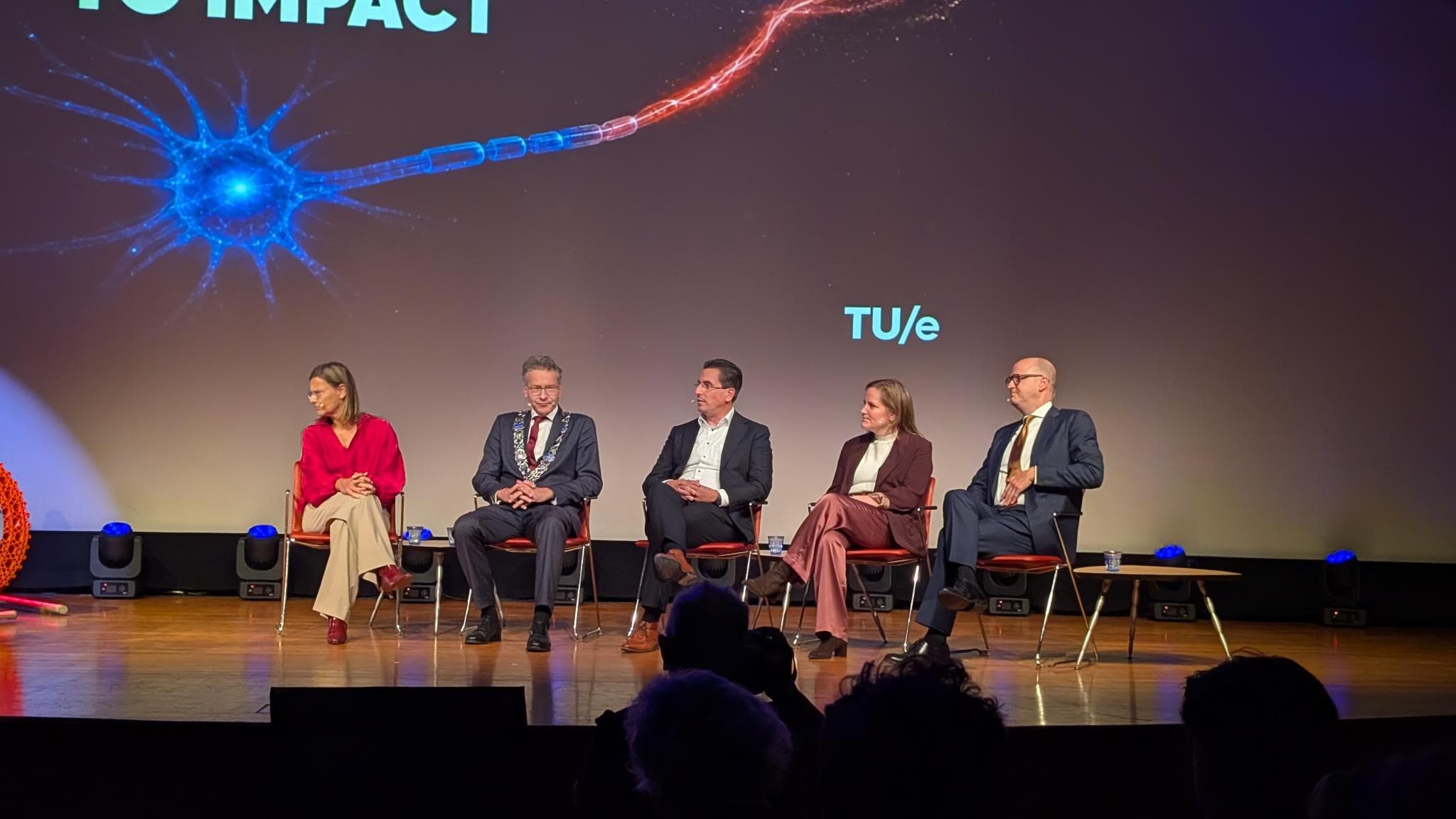
At the opening of the academic year at Eindhoven University of Technology (TU/e), leaders from politics, academia, and industry converged on a decisive theme: Europe’s future hinges on strategic focus and execution, rather than on fragmented attempts by every region to do everything.
No single valley
"Don’t look for one Silicon Valley," argued Eindhoven Mayor Jeroen Dijsselbloem. "There are a lot of European Silicon Valley-kind of ecosystems growing. Develop them further."
Dijsselbloem stressed that the European Union’s upcoming budgetary frameworks must prioritise targeted capital deployment into regions that have already proven their industrial and academic gravity. "If we, as Europe, are able to define what the top technologies are that we want to take at least an A-league position in, the next question is: Where are our ecosystems that have that potential?"
The prerequisite is clear: identify regions with at least one anchor company operating at global scale alongside a specialised technical university, and give them the resources to scale rapidly.
Focus on critical control points
TU/e Rector Magnificus Silvia Lenaerts highlighted the necessity of sharp regional specialisation over generic innovation policies. Rather than chasing total autonomy across all supply chains, Europe must secure "critical control points": domains where specialised ecosystems hold indispensable technological capabilities.
"Europe must chart its own path to pursue sovereignty... to reduce our dependency, but especially to preserve the capacity to make our own human-centred choices," Lenaerts noted.
She pointed to concrete cross-border links already delivering results, such as the corridor between Brainport Eindhoven and Munich’s industrial high-tech hub (including partners like UnternehmerTUM, BMW, and Siemens), as well as partnerships with imec and KU Leuven. In sectors such as heterogeneous semiconductor integration, advanced functional materials, and energy transition hardware, regional specialisation creates deep value chains spanning the entire continent.
Geopolitical urgency as the catalyst
Member of the European Parliament Bart Groothuis (VVD) framed the development of these ecosystems not merely as an economic ambition, but as a core pillar of European resilience against escalating geopolitical pressure.
With rising technological competition and supply-chain vulnerabilities, Groothuis argued that regional clusters must build horizontal partnerships and move decisively from policy debates to concrete implementation. Rather than drowning in bureaucratic red tape and risk-averse procedures, Europe's ecosystems must adopt an entrepreneurial, execution-first mindset.
Connecting the puzzle
The consensus from Eindhoven offers a blueprint for European policymakers:
- Stop duplicating efforts: Allow regions to focus intensely on their distinct industrial and scientific strengths rather than mandating uniform tech hubs.
- Build horizontal value chains: Link upstream research institutions with downstream industrial integrators across national borders.
- Deploy capital with speed: Direct European framework funding toward established, agile clusters capable of executing high-risk, high-reward deep tech initiatives.
By connecting specialised innovation hubs into a unified European framework, the continent can turn its regional diversity into its greatest competitive asset.