
8 European alternatives to Outlook and Gmail
Protect your data from espionage and comply with the NIS2 Directive. Discover eight secure, European alternatives to American email services
Published on June 16, 2026


Merien co-founded E52 in 2015 and envisioned AI in journalism, leading to Laio. He writes bold columns on hydrogen and mobility—often with a sharp edge.
The dominance of American tech giants in our email communications poses a growing risk. We wrote about this topic last year, and the reasons for choosing a European email platform have not diminished; that is why we are publishing a new version of our article on email alternatives.
For businesses, consciously choosing an email platform is a matter of strict legislation. The impending enforcement of the European NIS2 Directive is forcing organizations to ensure the strict security of their digital supply chains. For individuals, a different, equally urgent threat looms. They risk foreign intelligence agencies secretly monitoring their communications under U.S. surveillance laws. The call for digital sovereignty is therefore louder than ever. European email providers are responding to this trend smartly. Not only do they offer strong encryption and local data storage, but they are now also legally enshrining their independence. This permanently protects them against takeovers by foreign investors. In this article, we discuss the geopolitical and legal forces driving this shift. We then present eight European alternatives that guarantee your privacy and compliance.
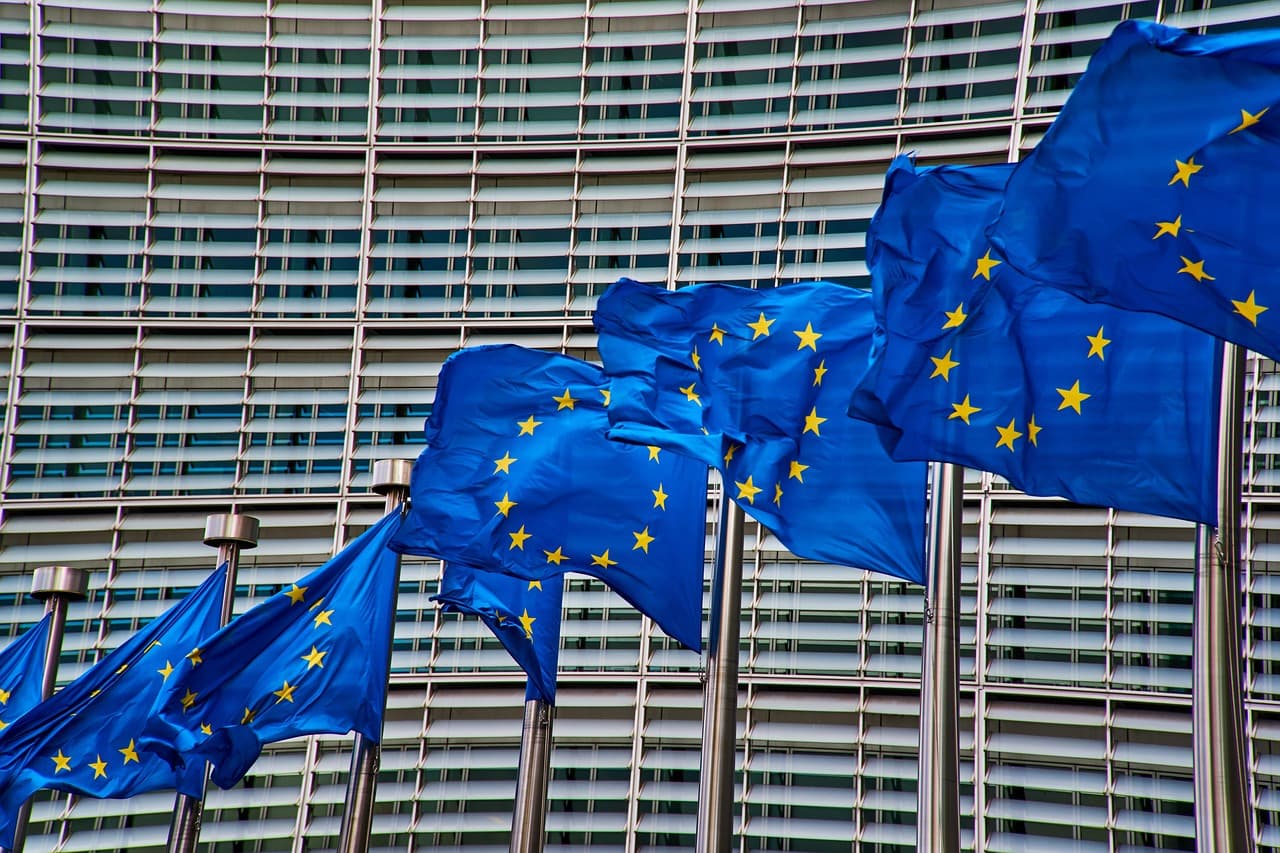
The European Alternative
The European Alternative is a series about European tech solutions that prioritize privacy, digital sovereignty, and sustainability. Instead of relying on major American platforms, we highlight the alternatives Europe itself has to offer—transparent, secure, and aligned with European values.
The shadow of the CLOUD Act and Schrems III
The legal basis for transferring personal data to the U.S. is faltering. The EU-U.S. Data Privacy Framework (DPF) is under heavy fire. Privacy organization noyb is preparing active steps toward a “Schrems III” ruling. Political shifts in the U.S. are amplifying this uncertainty. The U.S. Supreme Court is currently hearing a case that threatens the independence of the Federal Trade Commission (FTC). If this regulator falls, the DPF will immediately become legally untenable. Compounding this instability is the U.S. CLOUD Act. This law requires U.S. companies to hand over data to intelligence agencies, regardless of the servers' physical location. As a result, companies are increasingly opting for full digital sovereignty as a preventive measure. They are moving their email infrastructure to purely European providers, falling outside the scope of U.S. legislation. This guarantees that trade secrets and personal data truly remain in Europe.
The harsh reality of the NIS2 Directive
For the business market, email security is no longer optional. The European cybersecurity directive NIS2 is a harsh reality for thousands of organizations. The final deadline for the first formal compliance audits is mid-2026. Under this legislation, email security has become an explicit part of the duty of care. Companies must strictly implement modern standards such as SPF, DKIM, and DMARC. Enforcement is unprecedentedly strict. Regulators can impose fines of up to 10 million euros or 2% of global annual revenue. Furthermore, senior management is personally liable for negligence. A crucial component of NIS2 is supply chain security. Companies are legally responsible for the cybersecurity of their suppliers. This is leading to a wave of business migrations. Organizations are moving away from U.S. cloud services en masse. They are opting for European email providers with strong encryption and local hosting. This immediately eliminates major compliance risks.
The Threat to individuals via FISA
While companies struggle with compliance, individuals are primarily at risk due to U.S. surveillance legislation. The greatest danger lies in Section 702 of the Foreign Intelligence Surveillance Act (FISA). This law grants U.S. intelligence agencies the authority to monitor the communications of non-U.S. citizens. No specific, individual court order is required for this. Users of Gmail or Outlook fall directly under this legislation. Through the PRISM program, U.S. tech giants are legally required to hand over data. Even citizens with no malicious intent are at risk. Data often ends up in databases as “collateral damage.” This happens, for example, when you email a suspicious person. You also face risk when applying for an ESTA visa for the U.S. U.S. border control actively screens contact information against these databases. European email alternatives serve as a crucial shield here. They have no U.S. parent company and fall outside the scope of FISA. Furthermore, they use zero-access encryption. The provider cannot read the emails itself and therefore can never hand them over.
1. Soverin (Netherlands)
The Dutch company Soverin has been offering a reliable alternative to American email services for ten years. The platform focuses heavily on the business market. Soverin adheres to a strict “privacy by design” model with no hidden tracking. The company was recently acquired by The Sharing Group (TSG). This is the group behind Mijndomein and MyWheels, among others. TSG operates according to the Steward Ownership model. This is a legal structure in which profit and control are strictly separated. As a result, it is legally impossible for foreign tech giants to take over the company. This ensures that Soverin remains independent and purely Dutch. For business users, this is an excellent choice. The platform manages over a million mailboxes. All servers are located in the Netherlands, and the company is fully ISO-certified. This allows organizations to immediately comply with the strict requirements of the NIS2 Directive for a secure supply chain.
2. Infomaniak (Switzerland)
Infomaniak is a well-established name from Switzerland. The company provides the comprehensive email service, MyKSuite, with 20 gigabytes of storage space. The provider operates its own data centers, which are entirely powered by renewable energy. Infomaniak recently took a historic step to safeguard its independence. Founder Boris Siegenthaler transferred the majority of the shares to the newly established Infomaniak Foundation. This public-benefit foundation guarantees the company’s sovereignty in perpetuity. The articles of association strictly stipulate that Infomaniak may never be sold to foreign investors. This model guarantees that user privacy always takes precedence over commercial interests. This watertight legal structure positions Infomaniak as an extremely stable partner. It is a safe haven for individuals and businesses seeking a reliable European alternative.
3. Proton Mail (Switzerland)
Proton Mail has grown into a global giant with over 100 million users. Scientists from CERN founded the platform. The company is known for its rock-solid zero-access encryption. Proton recently transitioned to a non-profit structure. The company is now largely owned by the Swiss Proton Foundation. This prevents hostile takeovers and keeps shareholders at bay. Technologically, Proton is leading the way with on-premises artificial intelligence. American competitors scan emails on cloud servers. Proton takes a different approach by introducing the AI assistant Lumo. Lumo helps summarize and draft emails. The system stores all chat history with zero-access encryption. Not even Proton can access this data. This proves that advanced productivity tools and strict privacy go hand in hand.
4. Tuta (Germany)
The German company Tuta has consciously chosen a radically different path. The company remains entirely owned by its original founders. They resolutely refuse to partner with external investors. This financial independence allows Tuta to adhere to a strict “Zero AI” philosophy. Recent user research showed that only 3% of their customers need an AI assistant. Tuta therefore refuses any form of server-side processing of email content. Instead, the company focuses entirely on quantum-resistant cryptography. This ensures that emails will remain secure against future advanced decryption techniques. Users can also create anonymous accounts without providing a phone number. This makes Tuta the ultimate choice for the absolute privacy purist.
5. Posteo (Germany)
Posteo is a small but highly principled player based in Berlin. This independent company operates entirely without venture capital. They refuse, as a matter of principle, any form of tracking or advertising. Posteo funds itself exclusively through user subscriptions. Sustainability is a core value for the provider. The entire infrastructure runs on green energy. Posteo stands out for its uncompromising stance on data collection. Users can pay and register completely anonymously. The platform does not store IP addresses. All stored data is encrypted by default. Posteo is a private company and does not accept external investors. As a result, there is absolutely no pressure to monetize user data. This makes it a very stable and trustworthy choice for consumers.
6. Mailfence (Belgium)
The Belgian company Mailfence proves that stability is a valuable asset. The platform is owned by the ContactOffice Group. This company has been active in the sector since 1999. Mailfence is still wholly owned by its original Belgian founders. There is not a single cent of external capital in the company. This means there is zero risk of U.S. interference through investors. Mailfence offers a complete online office suite with calendars and documents. The platform supports end-to-end encryption and digital signatures. The servers are physically located in Belgium. As a result, all data falls under strict European privacy laws. Mailfence explicitly positions itself as a champion of digital rights. The company regularly donates to organizations fighting for online privacy. For users seeking a mature European ecosystem, this is an excellent alternative.
7. Murena (France)
A notable addition to the European landscape is the French platform Murena. This platform is entirely French-owned. Murena works closely with the e Foundation. This non-profit organization is best known for the privacy-friendly mobile operating system /e/OS. Murena offers a seamless email experience within a broader ecosystem of secure cloud services. The platform actively strips all hidden trackers from incoming emails. This prevents senders from seeing if and when you open a message. Murena hosts its services exclusively on European servers. The company enforces a strict anti-data-mining policy. Its close ties with the open-source community ensure transparency and continuous security audits. Murena offers a compelling all-in-one package for users who want to disconnect their entire digital life from Big Tech.
8. Self-hosting (Mailcow or Modoboa)
For organizations or tech-savvy individuals, self-hosting is the ultimate form of digital sovereignty. By running your own mail server, you eliminate any dependence on third parties. Popular European open-source solutions for this are Mailcow and Modoboa. Mailcow is a suite of popular mail tools in a Docker container. This significantly simplifies installation and management. Modoboa is a robust alternative that currently hosts more than 800,000 mailboxes. Both systems offer built-in support for essential security standards such as TLS, SPF, DKIM, and DMARC. This makes them immediately suitable for meeting the strict requirements of the NIS2 Directive. Self-hosting does, however, require considerable technical knowledge for maintenance and security updates. It is not a simple “plug-and-play” solution. A dedicated server, however, offers the highest possible guarantee against espionage. Whichever route you choose, the transition to European infrastructure is now a strategic necessity.