
8 Dutch food innovations changing how food is grown, made, kept
The next food revolution may be less about one spectacular product than about redesigning the materials that connect seed to plate.
Published on November 9, 2026

Bart, co-founder of Media52 and Professor of Journalism oversees IO+, events, and Laio. A journalist at heart, he keeps writing as many stories as possible.
From potatoes grown from true seed and robots that laser weeds to AI-run greenhouses, cultivated beef and proteins extracted from seaweed: Dutch food innovation is moving from the field to the factory - and even into the sea.
Feeding the world is not simply a question of producing more food. It is also about the resilience of crops, the availability of planting material, how precisely farmers can intervene in a field, what happens inside greenhouses, where proteins and fats come from, and how much food disappears between harvest and plate.
Those questions are becoming harder to ignore. An estimated 673 million people experienced hunger in 2024, according to the UN's latest State of Food Security and Nutrition in the World report. Around 2.3 billion experienced moderate or severe food insecurity. At the same time, the global population is projected to reach around 9.7 billion by 2050.
For decades, the Netherlands has built expertise around plant breeding, greenhouse horticulture, agricultural engineering, food processing and logistics. The newest generation of food innovation adds biotechnology, robotics, artificial intelligence and new production methods to that mix.
The technologies are at very different stages. Some are already operating on farms and in factories. Others are still moving through pilot production or regulatory approval. Their environmental effects should not be treated as interchangeable. A laser-weeding robot does not automatically make an entire farm sustainable. A protein made without livestock does not automatically have a lower lifecycle footprint. And a new crop variety only contributes to food security if farmers can grow it successfully under local conditions.
These eight examples are therefore not eight claims that the Netherlands has solved the future of food. They show eight of the dozens of places where Dutch innovators are working to change how the food system functions. Which is fundamental for anyone aiming to solve the challenges touching the future of food.
1. Solynta: starting the potato with a seed instead of another potato
What if shipping potatoes around the world started with tiny seeds rather than tonnes of seed tubers?
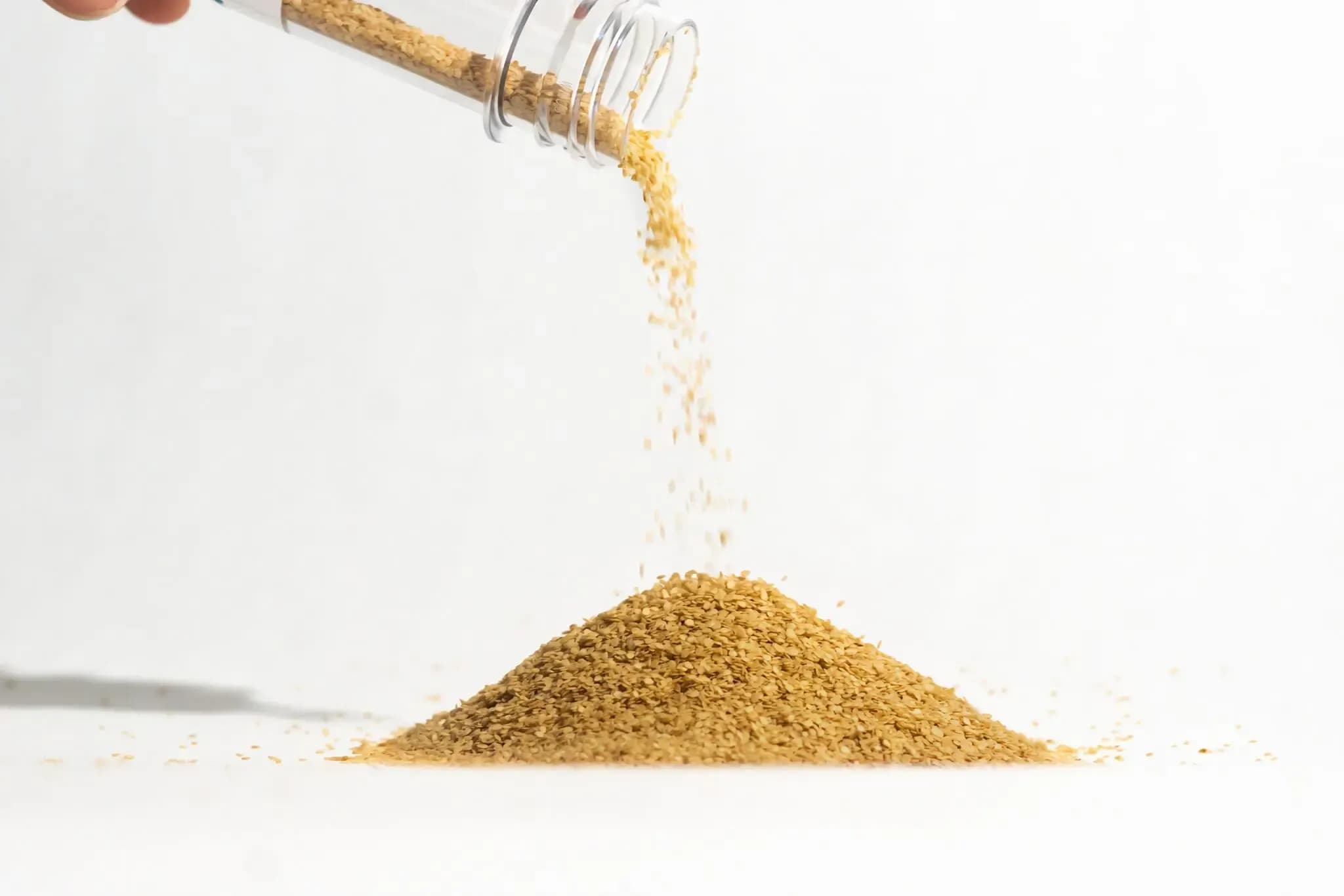
Solynta: potato seeds
For centuries, potatoes have usually been propagated vegetatively. Farmers plant specially grown seed potatoes, which develop into the next crop.
Wageningen-based Solynta is trying to change that starting point. The company has developed hybrid potato varieties that can be grown from botanical seed: Hybrid True Potato Seed, or HTPS.
That apparently small change has large practical consequences. True seeds are fundamentally different from bulky seed tubers in terms of storage, transport, and multiplication. Hybrid breeding also provides breeders with another route to combine traits and produce genetically uniform offspring.
In June 2026, SOLHY019 became the first diploid hybrid potato variety grown from hybrid true potato seed to enter the Dutch National Variety Register. The registration followed approval by the Dutch Board of Plant Varieties. A second recent milestone illustrates the international ambition. In July, Kenya approved another Solynta variety, SOLHY023, which the company says carries multiple genes conferring resistance to late blight.
That does not mean true potato seed will replace tubers everywhere. Potato production systems, agronomic knowledge, climate and markets differ enormously between countries. But the innovation changes something fundamental about one of the world's major food crops: the logistics of its starting material.
Solynta's commercial varieties are now moving from a breeding breakthrough into actual markets.
2. Pixelfarming Robotics: a robot that decides which individual plant has to go
What if weed control happened plant by plant instead of field by field?
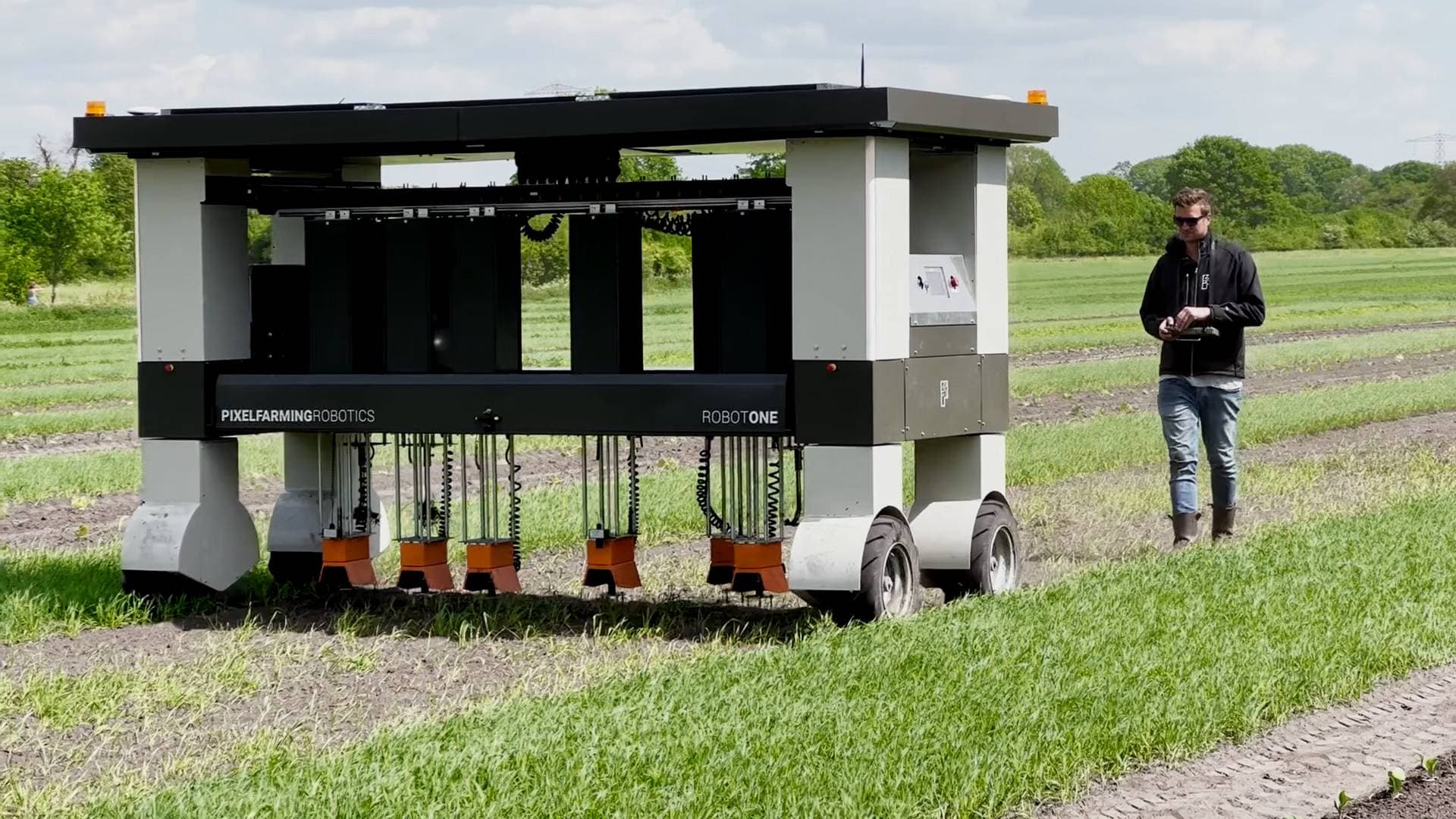
pixelfarming robotics
Drive through the fields around Almkerk in the Dutch province of North Brabant, and you may encounter an unusual farm worker. Robot One, developed by Pixelfarming Robotics, is a self-propelled agricultural robot equipped with cameras, computer vision and high-powered lasers.
The basic sequence is simple: scan, identify, act. The robot photographs plants in the field. Users label crop and weed species to train a plant-recognition model. Once that model has been validated, the machine drives through the crop, identifies individual weeds and directs a laser beam towards them.
The laser heats water inside the plant cells until they rupture. Pixelfarming says the system works best when weeds are still small, particularly around the two-leaf stage. The important precision-agriculture principle is not that lasers are automatically environmentally superior to every alternative. It is that an agricultural machine can observe and act at the level of an individual plant. That changes the logic of intervention. Instead of applying a single treatment across an entire field, the machine can decide which plant to target.
Robot One has moved beyond laboratory testing. Pixelfarming Robotics is supplying its autonomous robots to customers in Europe and Canada. The company's first growers received production machines in 2024.
The laser-weeding function does not apply herbicide to the targeted plant. That is a concrete feature of the process. Still, the total pesticide reduction, soil health, yields and environmental footprint, will depend on how the robot is used within a complete cultivation system.
Precision farming is often presented as a story about collecting more data. Robot One shows the other half of the equation: once the machine knows exactly what it is looking at, it can also act with much greater precision.
3. Source.ag: exporting the intelligence inside the greenhouse
The Netherlands became famous for sophisticated greenhouses. The next export product may be the software that helps run them.
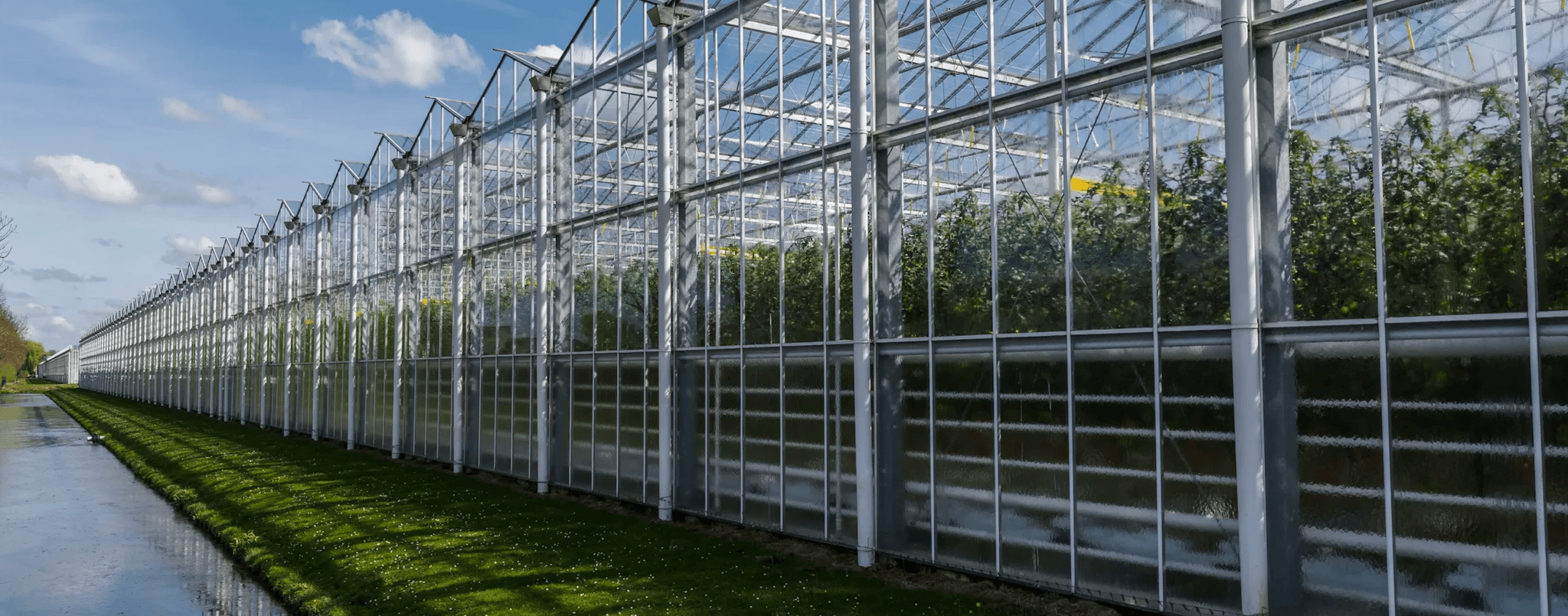
Greenhouse © Source.ag
Greenhouse horticulture allows growers to control variables that open-field farmers largely have to accept: temperature, irrigation, lighting, humidity and crop strategy. But more control also means more decisions.
Amsterdam-based Source.ag is developing an AI platform for professional greenhouse growers that turns cultivation data into forecasts and operating decisions. The company works on applications including crop planning, harvest forecasting and automated irrigation.
Source.ag’s software has been implemented in hundreds of greenhouses in 20 countries. Supported by AI-based forecasting, those greenhouses produce tomatoes, peppers and cucumbers for international markets.
Better forecasting solves a real problem. A greenhouse does not end at the greenhouse door. Harvest volumes determine labour planning, packaging, logistics, contracts with retailers and what happens when expected supply does not match actual demand, so forecasting in the greenhouse determines the impact of the whole chain.
Source.ag is essentially trying to encode part of a highly skilled grower's experience into software that can learn across many cultivation environments.
That may be the next chapter of Dutch greenhouse expertise. Not just exporting glass, climate systems and seeds, but exporting some of the decision-making layer that connects them.
4. NoPalm Ingredients: making food fats in a fermentation tank
What if part of the world's supply of oils and fats could be produced next to a food factory rather than on a plantation?
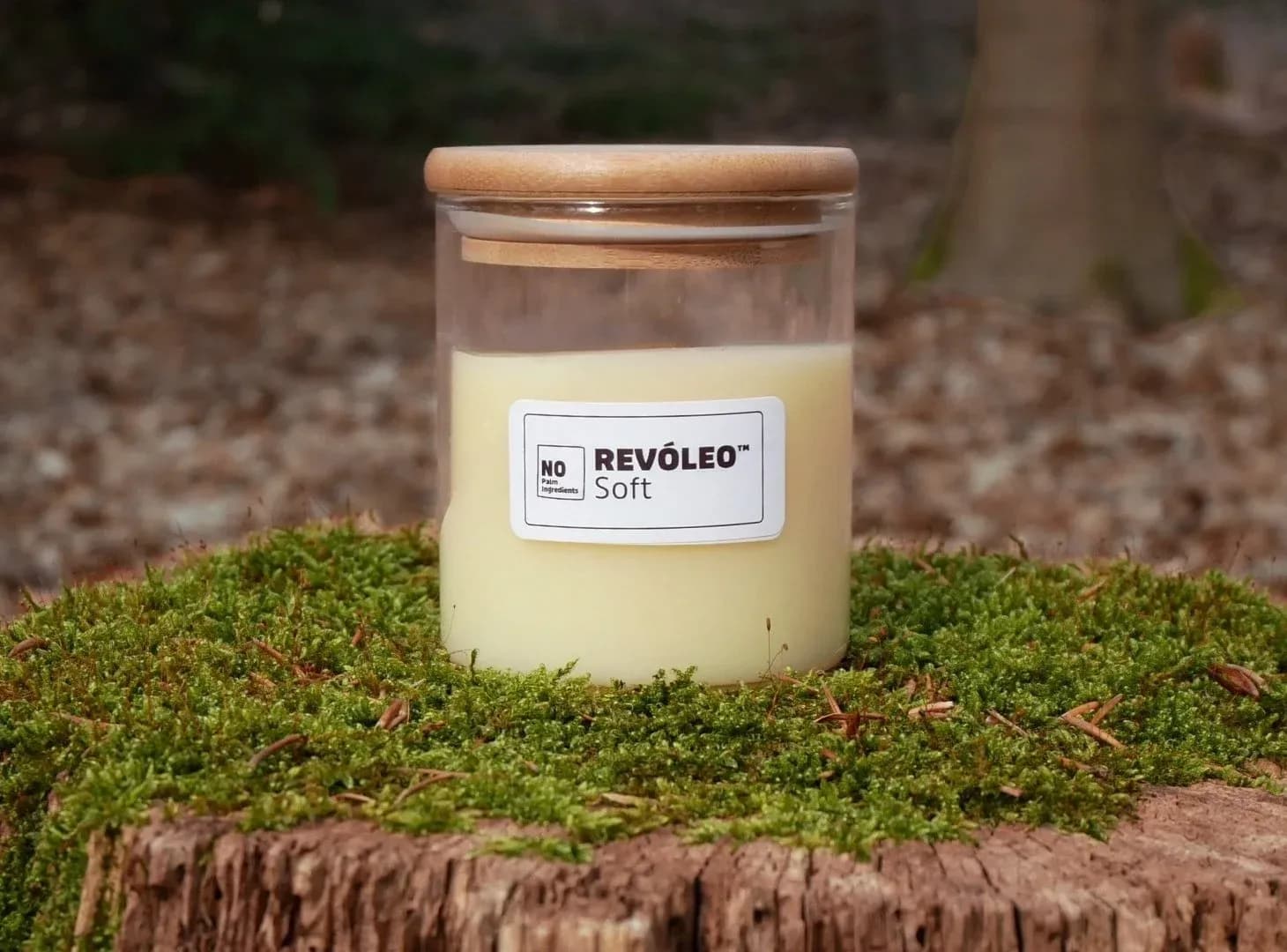
NoPalmIngredients
Palm oil is extraordinarily useful. It provides texture, stability and functionality to products ranging from confectionery and bakery goods to cosmetics. That combination of properties is one reason it is difficult to replace.
Wageningen-based NoPalm Ingredients is approaching the problem from an entirely different direction. Instead of looking for another oil crop, the company uses yeast fermentation. Its process feeds food-industry side streams to a yeast strain without genetically modified organisms, to produce microbial oils and fats. These can then be formulated for different functional properties in food and other applications.
The interesting shift is from agriculture to biotechnology. NoPalm is not literally producing palm oil. It is producing fermentation-derived oils intended to perform functions for which palm and other tropical oils are currently used.
The technology has already been tested at industrial scale. The company has successfully carried out a 120,000-litre yeast-oil fermentation using food-industry side streams. Its next step is more tangible. NoPalm has signed an agreement with the food research company NIZO to build a demonstration factory at the Food Innovation Campus in Ede, near Wageningen. First industrial production is planned for the second half of 2026.
The company is also studying a future commercial plant in collaboration with the dairy cooperative Milcobel. Under that concept, whey permeate from dairy production would become fermentation feedstock at the same site where the side stream is generated. The partners are targeting 2028 as a possible start date if the feasibility study leads to investment.
NoPalm publishes ambitious estimates of potential land and greenhouse gas savings compared with conventional palm oil production. Those figures, of course, depend on feedstock, energy use, plant configuration and the comparison methodology. Still, the current innovation story is already strong enough without them: a food-industry side stream enters a fermentation tank. An edible fat comes out.
5. Revyve: turning yeast into the texture of an egg
The egg in tomorrow's mayonnaise may once have helped make beer.
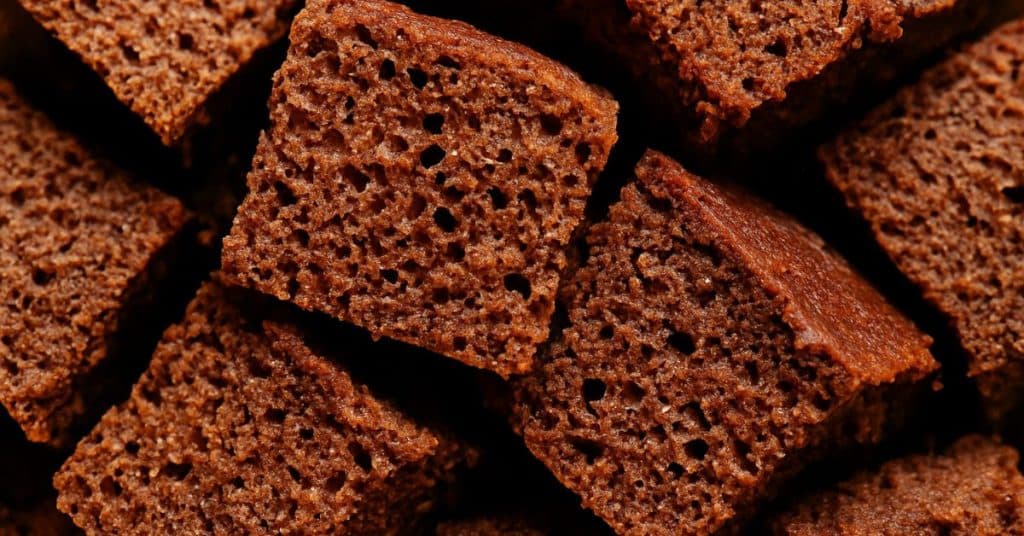
Revyve chocolate-sponge-cake
Egg proteins foam, bind, gel and emulsify. Those functional properties explain why eggs appear in cakes, sauces, snacks and many other processed foods. Wageningen-born Revyve has discovered that yeast proteins can perform several of those same jobs.
The company grew out of an academic research project in which its founders experimented with proteins extracted from brewer's spent yeast. Early tests included pancakes and meringues.
It’s good to be aware that Revyve does not ferment its own protein in the way a precision-fermentation company does. Instead, it sources baker's and brewer's yeast and processes the yeast cells to obtain protein and fibre fractions with specific functional properties.
The company describes a process in which yeast cells are opened and the resulting material is treated at relatively low temperatures to preserve functions such as foaming, gelation and emulsification.
That makes Revyve as much an ingredients story as a protein story. A food manufacturer does not necessarily need an ingredient that tastes like an egg. It may need something that does what an egg does inside a recipe. And Revyve has reached that goal on the level of industrial production.
Its first commercial production facility in Dinteloord began operating in 2024. Following a nearly €24 million financing round in 2025, the company said it would expand annual capacity beyond 1,600 tonnes. The plant was already supplying several commercial customers at the time of the announcement.
Today, a stream of yeast already used in the food industry is being processed into ingredients with sufficient functionality to replace some uses of egg and other texturising ingredients. Sometimes changing food starts not with creating a new flavour, but with reproducing a physical behaviour.
6. Mosa Meat: growing beef without raising the whole animal
Thirteen years after presenting the world’s first cultivated hamburger, Mosa Meat is working to turn a scientific breakthrough into a new way of producing meat.
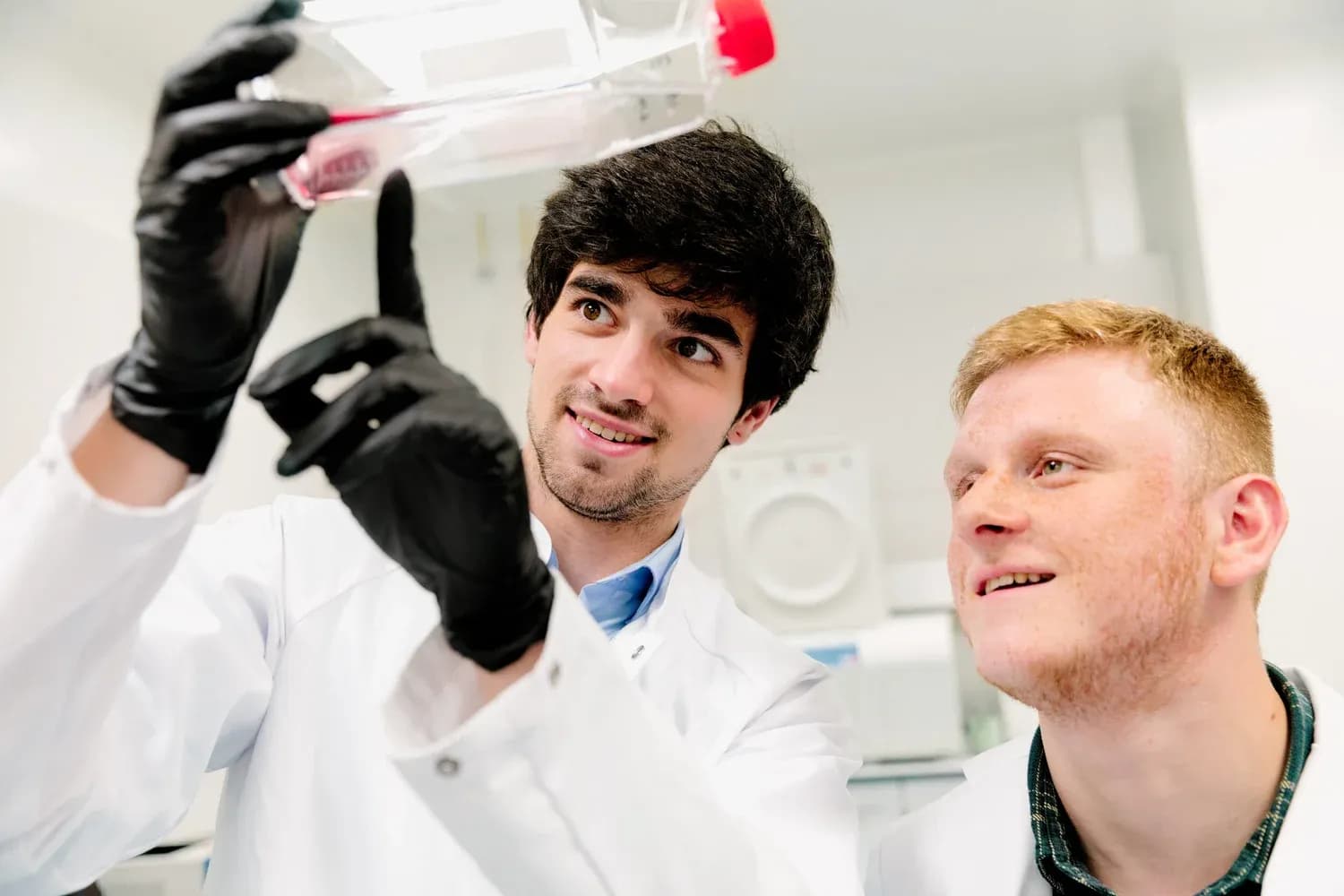
Mosa Meat Lab
Few Dutch food innovations have attracted as much international attention as the cultivated hamburger presented in London in 2013. Maastricht University professor Mark Post led the research and later helped launch Mosa Meat, still based in Maastricht.
Its innovation changes meat production at its most fundamental level. Instead of raising and slaughtering an entire animal, Mosa Meat starts with a small sample of cells. These cells are multiplied in controlled conditions and then encouraged to develop into muscle and fat tissue. The result is real animal tissue, produced through cell cultivation.
This approach could reshape several parts of the food chain. Conventional beef production requires large amounts of land, feed and water, while animals need years to grow. Cultivated meat shifts much of that process into production facilities, where cells can be grown more directly and under closely controlled conditions. In principle, this could make meat production less dependent on livestock farming and reduce its use of animals and agricultural resources.
The challenge now is to move from a laboratory demonstration to efficient production at scale. Mosa Meat is developing methods to grow large quantities of cells, improve tissue structure, and reproduce the flavour, texture, and juiciness consumers associate with beef. Cultivated fat is particularly important: it provides much of meat’s characteristic aroma, mouthfeel and flavour, and can also be combined with plant-based ingredients to create hybrid products.
This is why Mosa Meat’s first European product application, submitted in January 2025, focuses on cultivated beef fat rather than a fully cultivated hamburger. The choice reflects a pragmatic innovation strategy: use a relatively small amount of cultivated animal tissue where it has the greatest effect on the eating experience, while plant-based ingredients provide the rest of the product.
Before such products can be sold in Europe, they must still pass the EU’s Novel Food procedure. But regulation is only one step in a much larger experiment. The decisive questions concern scale, cost, energy use, growth media and whether consumers will embrace meat made in a fundamentally different way.
Mosa Meat’s significance therefore extends beyond the burger presented in 2013. The company is exploring whether beef can become the product of a precise biological manufacturing process rather than an entire animal. If that model succeeds, it could change not only how meat is produced, but also the role of livestock, farms and factories throughout the food chain.
7. OneThird: giving a strawberry an estimated expiry date before it spoils
Food security is not only about growing more. It is also about knowing what to do with the food that has already been grown.
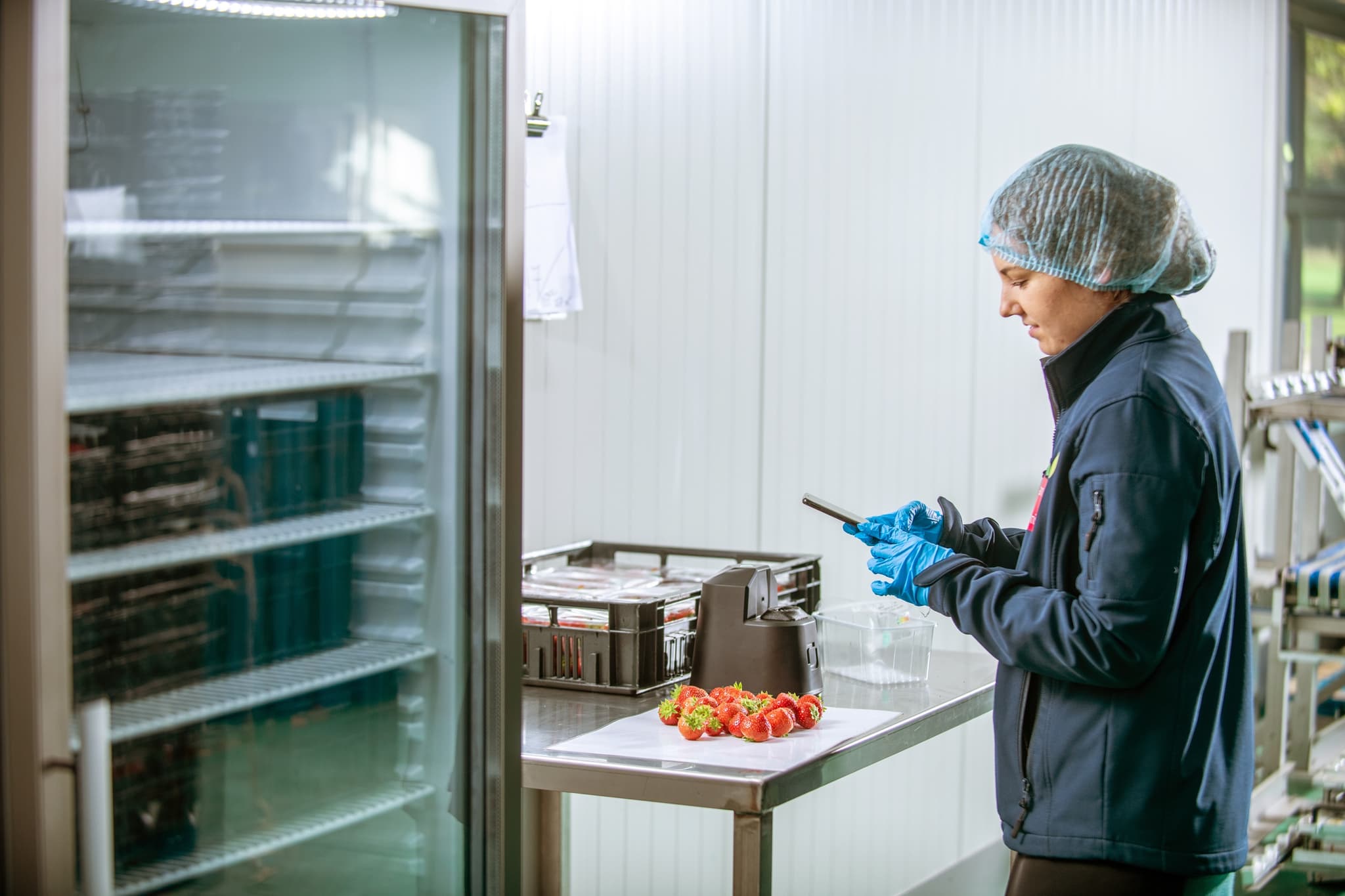
Onethird: Test Strawberry
Fresh fruit is biologically inconvenient. Two strawberries picked on the same day can deteriorate at different speeds. A batch that is suitable for a nearby supermarket may not survive a journey lasting several more days. Yet much of the fresh-produce supply chain still has to make those decisions based on appearance, averages and destructive sample testing.
Enschede-based OneThird is helping to measure what is happening inside the fruit. Its scanners use near-infrared spectroscopy to capture a spectral fingerprint. AI models then combine that information with biological and quality data to estimate parameters including remaining shelf life.
For strawberries, OneThird says its configured models can predict remaining shelf life to within approximately one day. There is an important qualification to add to that statement: this is not a single universal model that can be pointed at any fruit anywhere. Variety, growing conditions and supply-chain characteristics affect the prediction, so models require application-specific data and calibration.
In fact, that makes the technology more interesting rather than less. The scanner does not extend the fruit's shelf life. It creates information about the life the fruit probably has left, which can change routing decisions. A batch with more remaining shelf life can potentially travel further. Fruit with less time remaining can be directed to a closer customer rather than discovering the problem after transport.
OneThird has also taken the technology directly into supermarkets. In February 2026, the company introduced an updated avocado scanner with dual measurements. OneThird reports around 90% ripeness classification accuracy for the system and says that more than 350 scanners are installed in stores worldwide.
Claims that such technology will automatically eliminate a fixed percentage of food waste would require evidence across actual supply chains. The more defensible proposition is simpler: the fresher the information about food, the more informed the decision about where that food should go.
8. GOA Ventures: treating fresh seaweed like an oil refinery treats crude
The future of protein may not only be on land. Zeeland is looking towards the sea.
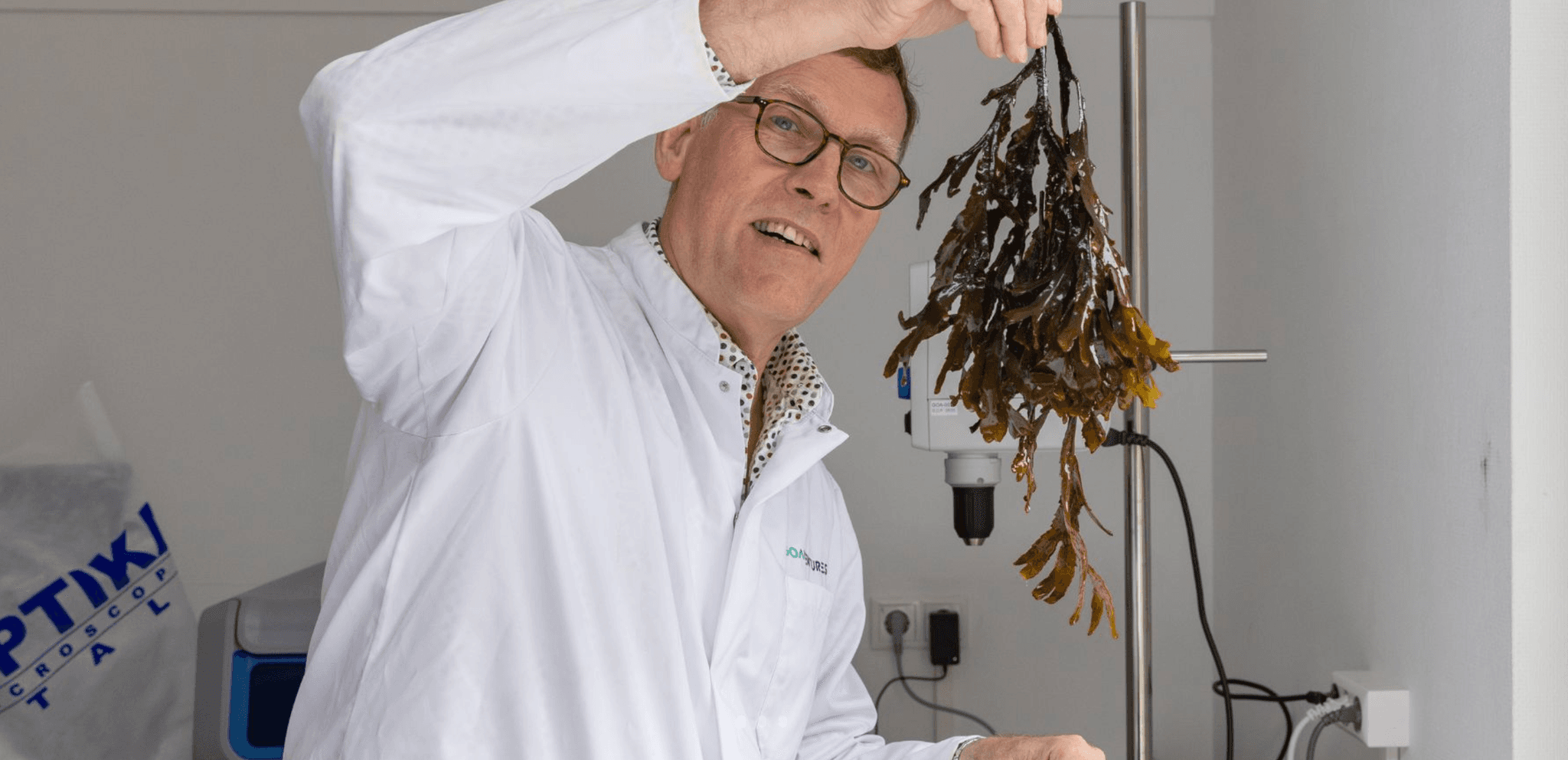
GOA Ventures
Seaweed is not one ingredient. It is a complex biomass containing proteins, carbohydrates, minerals and other compounds. The challenge is extracting enough value from those different components to make processing economically worthwhile.
In Yerseke, Zeeland, GOA Ventures is developing a biorefinery approach built around that idea.
Its process starts with fresh seaweed. Rather than first drying the biomass, GOA separates different fractions while the seaweed is still fresh. The company is currently focusing on extracting functional food-grade proteins while processing remaining biomass into biogas and recovering other components.
The food angle is particularly interesting. GOA says its protein fractions retain functional properties including foaming and emulsification. That potentially makes seaweed protein useful not simply as a nutritional protein but also as a food ingredient serving a technical role in formulations.
Processing the seaweed fresh is deliberate. GOA argues that drying can alter protein functionality, just as heating egg protein changes what it can subsequently do.
But the environmental implications should not be oversimplified. Seaweed does not automatically become a low-impact food ingredient merely because it grows in the sea. Cultivation methods, ecological effects, harvesting, transport, processing energy and product yields all matter. GOA is still working through precisely those scale-up questions.
In 2025, the company received €1.6 million from the Dutch Biotech Booster programme for its GOA@EASE project in Yerseke. The project is intended to move the process into a pilot facility and generate data across an entire seaweed-growing season. GOA currently operates an on-site pilot facility in Yerseke used to study seasonal variation and to scale up processes.
Zeeland is a fitting place for the final example. Dutch food innovation traditionally looks inland: potatoes, dairy, greenhouses and agricultural fields. GOA asks what happens if the raw material comes from the North Sea instead.
The Dutch food story is becoming more than a story about producing more
These eight innovations start at very different points in the food chain.
Solynta changes the planting material used to begin a potato crop. Pixelfarming Robotics enables an agricultural machine to distinguish one plant from another before acting. Source.ag turns greenhouse cultivation data into forecasts and increasingly automated decisions. NoPalm Ingredients moves part of oil and fat production into fermentation tanks. Revyve extracts new functionality from yeast already present in food-industry streams. Mosa Meat grows animal cells rather than an entire animal. OneThird wants to understand a fruit before it spoils. And GOA Ventures looks for food ingredients in fresh seaweed.
None of those technologies, on its own, guarantees food security or environmentally better production. Some have already reached paying customers and industrial facilities. Others are still proving pilot economics, adapting models to different crops or waiting for regulators to decide whether a new type of food can enter the market.
That difference matters, but it also reveals something about the contemporary Dutch food sector. The central question is shifting from “How can we produce more?” to “Where in the system can we intervene more intelligently?”
The answer is in the genetics. At the individual plant. Inside the greenhouse. In the fermentation tank. At the ingredient level. During cell cultivation. In the fresh-food supply chain. Or at the edge of the sea.
For a small country with a long history of trying to get more knowledge out of every square metre of agricultural land, the next food revolution may be less about one spectacular product than about redesigning the decisions, materials and technologies that connect seed to plate.