
€73bn pollution bill pressures EU industry reform
Industrial emissions reduction in the EU requires further action, as its societal costs remain high - at around €73 bn annually.
Published on February 25, 2026
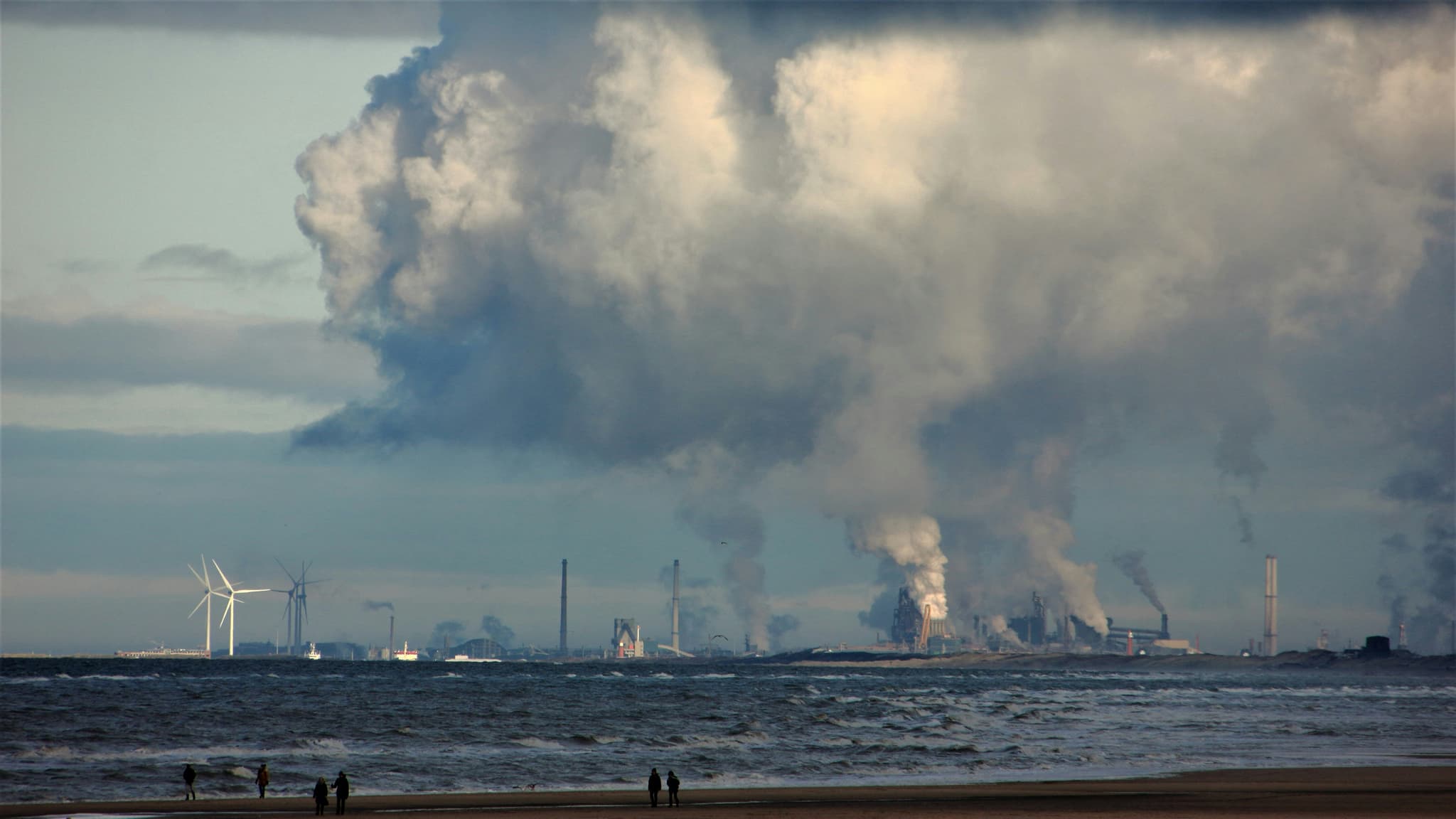
Tata Steel's IJmuden plant - © Lex Noordhoff - Unsplash

Team IO+ selects and features the most important news stories on innovation and technology, carefully curated by our editors.
No emissions and pollution reduction can happen in Europe without a deeper industrial transformation, the European Environmental Agency (EEA) underlines in a new analysis. Despite the reduction in energy-intensive industries' greenhouse gas emissions since 2005, progress has recently stalled. The external costs of this pollution, predominantly health-related, amount to a staggering €73 billion annually.
Under the energy-intensive industries umbrella fall paper, chemical, and plastics manufacturing, among others. Since 2005, their greenhouse gas (GHG) emissions dropped by 42%. Among them, there has been a significant decrease in nitrogen and sulfur oxides, as well as nickel and dioxins.
"To achieve more reductions, environmental legislation needs to be fully implemented, and emission-intensive processes require transformative change — while striving for the EU’s sustainable competitiveness ambitions," the briefing reads.
The analysis is set in the context of the EU's Clean Industrial Deal (CID), presented last year with the aim to accelerate industrial transformation while supporting sustainable competitiveness.
A map of pollution hotspots
The EEA analysis focuses on key energy-intensive sectors: iron and steel, cement and lime, aluminium, pulp and paper, glass and clay, and chemicals. All together they are responsible for ove 60% of the bloc's manufacturing sector's emissions.
Flanders, northern France, and the German Ruhr area are identified as industrial pollution hotspots. In the Netherlands, Tata Steel's IJmuiden plant is the one causing the highest external air pollution costs.
According to the analysis, supporting transformation in these sectors towards decarbonization, pollution prevention, and circularity would yield environmental and public health benefits. At the same time, embracing change would strengthen the EU's overall competitiveness.
Pathways for change
The EEA report identifies key pathways for industrial transformation that offer co-benefits for pollution prevention and climate mitigation. These pathways include electrification, the use of alternative feedstocks and materials, and the utilization of secondary raw materials. Electrification, alternative fuels, and system optimization can reduce energy, resource, and water use, as well as emissions and waste.
Alternative feedstocks such as low-carbon iron ore, sustainable bio-based raw materials, and green hydrogen can also lower process emissions. Additionally, circularity measures such as using secondary raw materials and closed-loop water circuits can reduce resource use and emissions.
"Historical evidence demonstrates that technological shifts typically provide co-benefits but can also create trade-offs between pollutants, underscoring the need for careful, sector-specific approaches. Decarbonisation policies and project support should aim to identify solutions with the greatest potential to deliver co-benefits for pollution prevention and circularity," concludes the report.