
€4M for startup turning steel waste into battery metals
Dutch startup Phoenix Metals raised €4 million to build a pilot plant recovering vanadium and other critical metals from steel waste.
Published on September 10, 2026
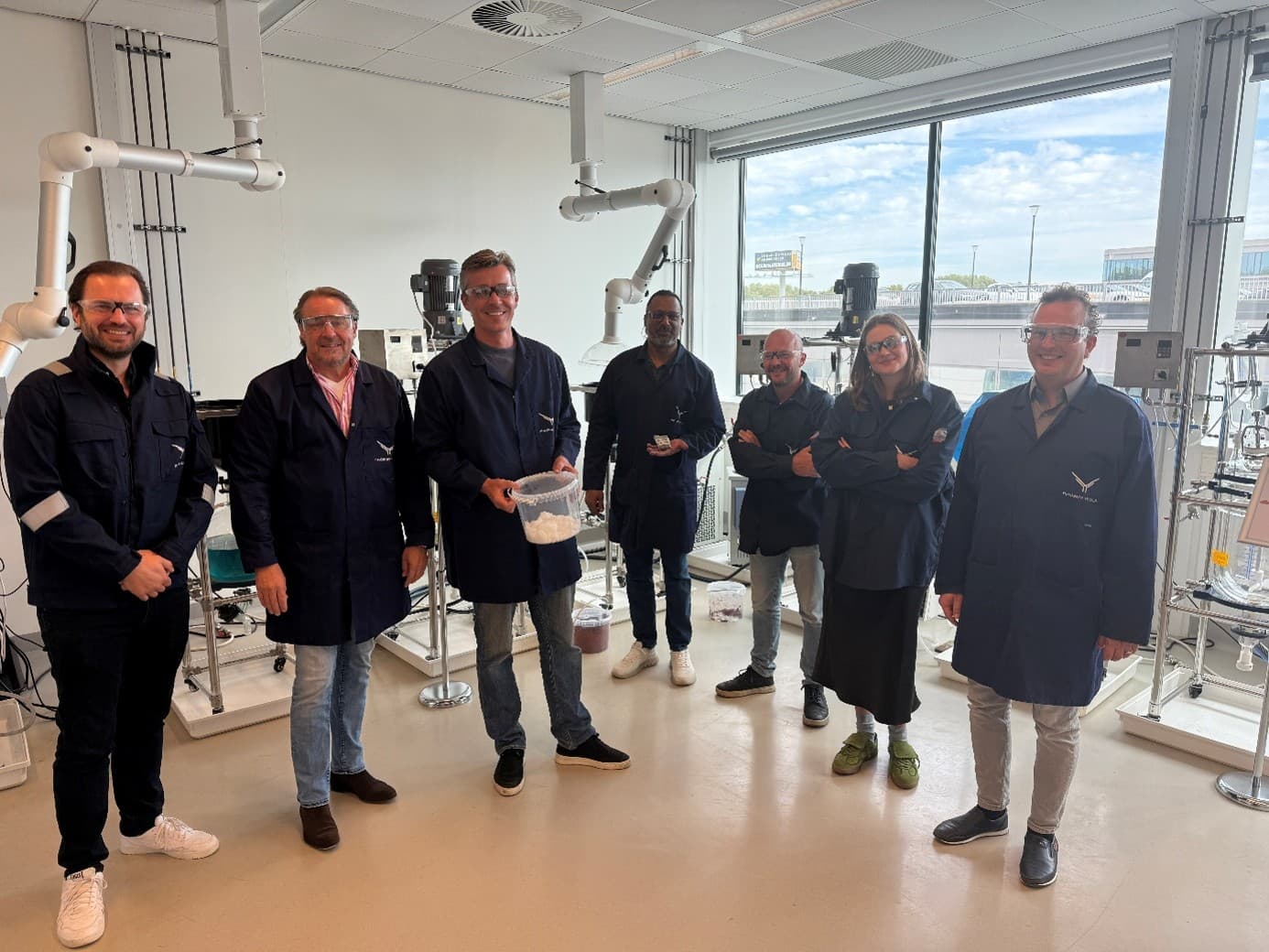
© InnovationQuarter

Team IO+ selects and features the most important news stories on innovation and technology, carefully curated by our editors.
Phoenix Metals, a Dutch deeptech company, has raised €4 million in fresh investment to build a pilot plant to recover critical raw materials, such as vanadium, from industrial waste. The plant marks the company's shift from lab-scale research to industrial-scale demonstration.
Dutch regional development agencies InnovationQuarter and ROM InWest led the funding round, alongside regional investor and project developer Mossinkoff Investments. The investment will fund the construction and commissioning of a pilot plant designed to process roughly 500 tonnes of material — a step Phoenix Metals says is essential to generating the operational data, qualified products, and industrial partnerships needed for its first full-scale commercial facility.
Mining waste instead of the ground
Phoenix Metals has developed a low-temperature hydrometallurgical process — one that extracts metals using water-based chemistry rather than high heat — to recover vanadium and other valuable materials from sources such as steel slag, refinery residues, and maritime waste. The company says its process avoids ammonia and organic solvents entirely and produces no hazardous process waste, running at temperatures below 100°C.
Unlike conventional recovery methods that typically target a single high-value metal, Phoenix Metals aims to extract value from the entire waste stream. From steel slag alone, the company is targeting recovery of not just vanadium, but also iron, magnesium, manganese, calcium-based products, and other reusable mineral fractions — with total recovery rates the company says can reach up to 99%.
Closing Europe's vanadium gap
The project addresses a strategic vulnerability: Europe currently imports 95% of the vanadium it needs. Vanadium is a critical material used in high-performance steel alloys for construction, defense, and nuclear applications, as well as in vanadium flow batteries — large-scale energy storage systems used by grid operators, industrial clusters, data centers, and renewable energy projects. Phoenix Metals says its process doesn't just recover vanadium but purifies it into battery-grade electrolyte ready for direct use in these batteries.
"Phoenix Metals demonstrates how innovation can unlock new value from industrial residual streams," said Reynier de Monchy, Senior Investment Manager at ROM InWest, adding that the project supports more circular, resilient industrial value chains in the region.
Beyond the seed round, Phoenix Metals has already secured more than €5 million in grants from the European Just Transition Fund, the provinces of South Holland and North Holland, the Netherlands Enterprise Agency, and Kansen voor West — public backing the company says reflects the growing strategic importance of recovering critical metals from Europe's own industrial waste.
Tata Steel partnership
The IJmuiden pilot will process steel slag and other feedstocks in collaboration with industrial partners, including Tata Steel Netherlands, to validate product quality and energy use at scale. Hans van der Weijde, Director Strategy, Programmes and External Collaborations at Tata Steel Technology, called the recovery of iron, magnesium, and calcium for reuse in steelmaking and cement "an attractive idea," and welcomed the additional vanadium recovery as a contribution to Europe's resilience on critical materials, even though it isn't directly relevant to Tata's own operations.
What's next
Phoenix Metals is targeting the start of pilot production in the first half of 2027, with a Series A round planned afterward to finance its first commercial-scale facility.
"We have enough vanadium in the steel slag produced by Tata in the Netherlands to already meet a third of current European import demand," said Gijsbert Bakker, CEO of Phoenix Metals. The company, which operates from Yes!Delft Labs on the TU Delft campus, says it is now moving from proving its technology to building what it describes as a new European raw-materials industry.