
2026: the tipping point for motorhomes and caravans
By 2026, campers and caravans will evolve from vacation vehicles into fully-fledged living solutions.
Published on January 13, 2026

Our DATA+ expert and Editor-in-Chief, Elcke Vels, explores AI, cyber security, and Dutch innovation. Her "What if..." column imagines bold scenarios beyond the norm.
2026 marks a turning point in the world of motorhomes and caravans. Major car manufacturers are no longer focusing on simple vans with a mattress, but are launching high-tech living spaces that are self-sufficient. Three specific models stand out this year.
A modular city apartment
The 2026 Kia Camper Van is a very special home on wheels. The camper is not built for the wilderness, but rather for flexible living between city and nature. The camper fits into a standard parking space. The drive is fully electric or hybrid. The electric version charges rapidly: from 10 to 80 percent in less than half an hour.
Inside, everything revolves around flexibility. Kia calls this the ‘Spielraum’ concept. Seats rotate, tables fold away, and modules slide along rails. This allows an office space to be transformed into a bedroom in seconds. Some luxury versions even have a pull-out bathroom unit. The car is continuously connected via 5G and Starlink options. With an expected starting price of around $68,000, Kia is making this lifestyle accessible to a wide audience.
A villa on wheels
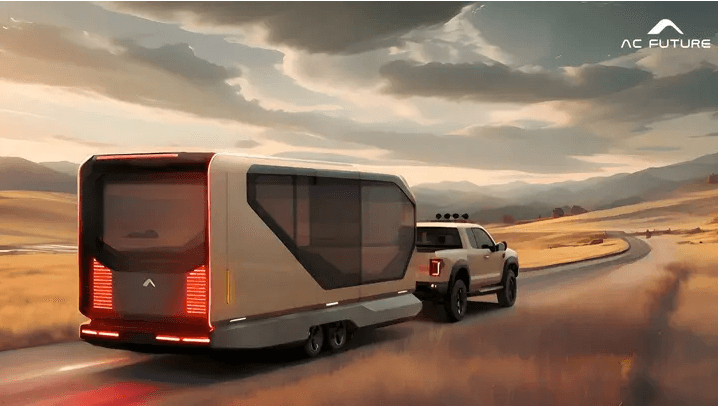
The most radical innovation comes from AC Future with their Transformer Home Trailer. This is anything but your average caravan. Once parked, the walls slide out on four sides. This doubles the living space to over 32 square meters. The result is a fully-fledged apartment with a separate bedroom, living room, and kitchen. The finish is luxurious and modern.
The system does not rely on the car, but has its own 100 kWh battery pack. This is powered by a solar panel roof that can generate up to 25 kilowatts. Even more impressive is the water system. The trailer extracts moisture from the air and filters it into drinking water. This makes the occupant completely independent of campsites or utilities. An AI system proactively manages these resources. With a price starting at $148,000, AC Future positions itself as a serious alternative to a second home.
Separate modules
Innovation doesn't have to come from far away. The VAN-Jorn already won awards in 2025 and remains relevant in 2026 thanks to a smart, modular system. The idea is simple and powerful: the interior consists of separate modules that you click onto rails. Weekend away with friends? Add an extra bed. More luggage? Remove a cabinet. No screws, no hassle — just click.
A solution to the housing crisis?
In short, in 2026, we will see a shift from passive energy consumption to active generation. Vehicles such as the AC Future trailer act as mobile power stations. They relieve the strain on the power grid instead of simply adding to it. This fits seamlessly into the European strategy for energy independence. In addition, these innovations offer a solution to the stagnant housing market. The Kia PV5 shows that you can live comfortably in less square footage, provided the technology is intelligently integrated. This forces legislators to consider new forms of living. Can you live permanently in a vehicle that is cleaner and smarter than an old apartment? The line between real estate and mobility is blurring.