
€1.3M grant boosts AI hunt for early pancreatic cancer
Catharina Hospital and Eindhoven University of Technology (TU/e) received funding for research into AI for detection of pancreatic cancer.
Published on December 17, 2025
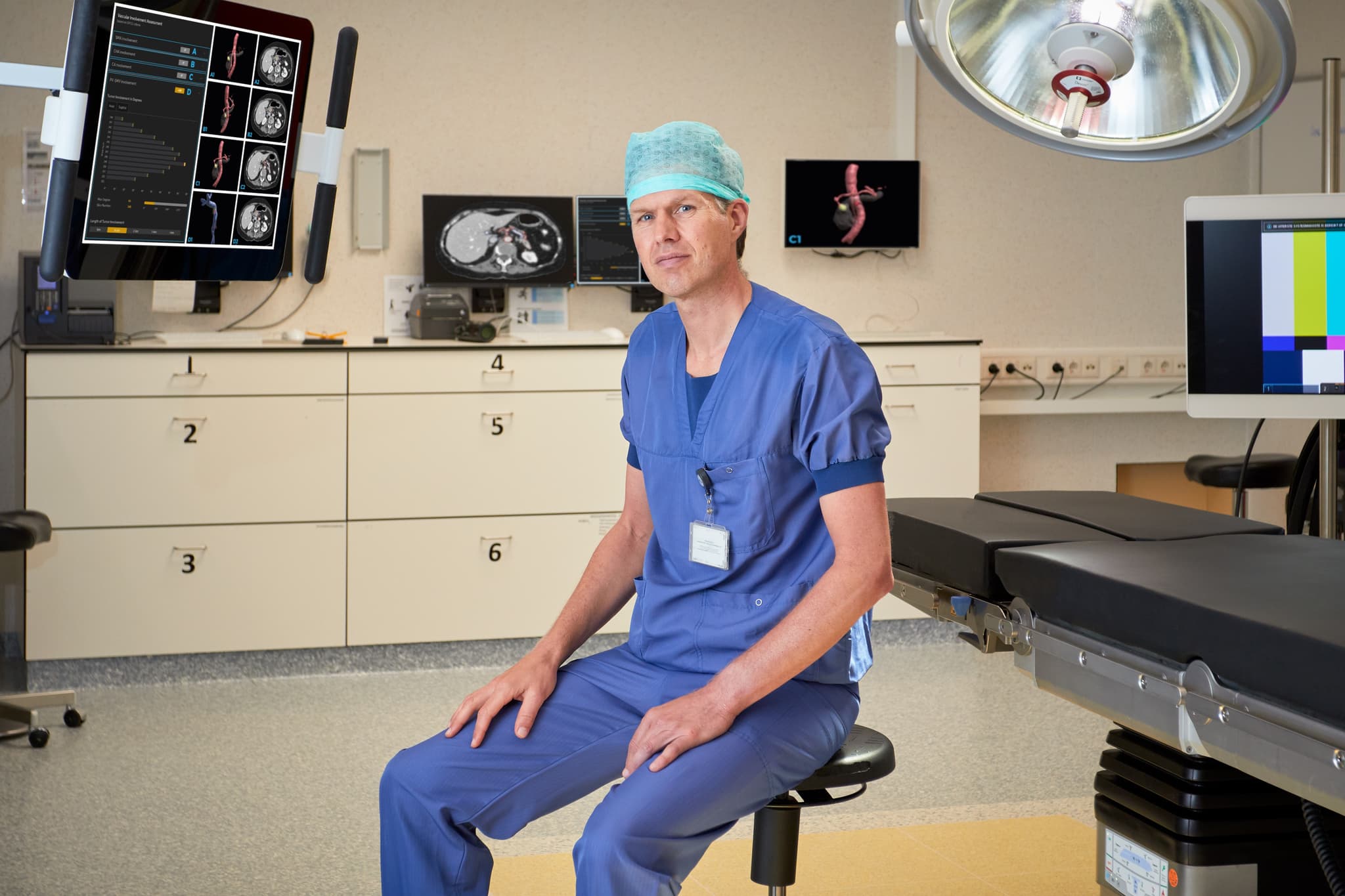
Misha Luyer - © Jarno Verhoef Catharina Ziekenhuis

Team IO+ selects and features the most important news stories on innovation and technology, carefully curated by our editors.
Catharina Hospital and Eindhoven University of Technology (TU/e) have been awarded €1,331,931.50 in funding from KWF, the Dutch Cancer Society, for innovative research into AI for early detection of pancreatic cancer. The five-year study, led by Professor and surgical oncologist Misha Luyer, aims to improve the diagnosis of one of the deadliest forms of cancer.
This collaboration combines Catharina Hospital’s medical expertise with TU/e’s technological knowledge. In prior research, the team developed an AI program that automatically analyzes abdominal computer tomography (CT) scans to detect tumors in the head of the pancreas. This project will investigate whether radiologists, using this AI tool, can identify tumors earlier and more reliably than without AI. The study will involve 25 Dutch hospitals and over 3,750 patients.
.png&w=2048&q=75)
Pancreatic cancer has an inferior prognosis: fewer than 5% of patients survive five years after diagnosis. This is mainly because the disease is often detected late. Early symptoms are vague, and tumors are difficult to spot on CT scans, leading to delayed diagnoses. The earlier a cancer is found, the greater the chance of curative treatment.
Providing better care
“This is fantastic news for our research. With this funding, we can, for the first time in the Netherlands, test at scale whether AI helps detect pancreatic cancer earlier. This could be a huge step forward for patients and healthcare in the Netherlands,” says Misha Luyer, Professor and surgical oncologist.
For patients, this new research could mean faster, more reliable diagnoses, fewer unnecessary tests, and a higher likelihood of successful treatment. For society, it could lead to improved survival rates and potentially lower healthcare costs. The grant will enable researchers to conduct such a test at scale.
Carla van Gils, Director of KWF Dutch Cancer Society: “The urgency for pancreatic cancer is extremely high: survival rates remain low, and progress requires innovative approaches. That’s why KWF is investing in research that integrates medical care and technological innovation at the national level. This funding comes from the Alpe d’HuZes/KWF fund and supports research that is not only scientifically groundbreaking but also focused on better outcomes for patients.”