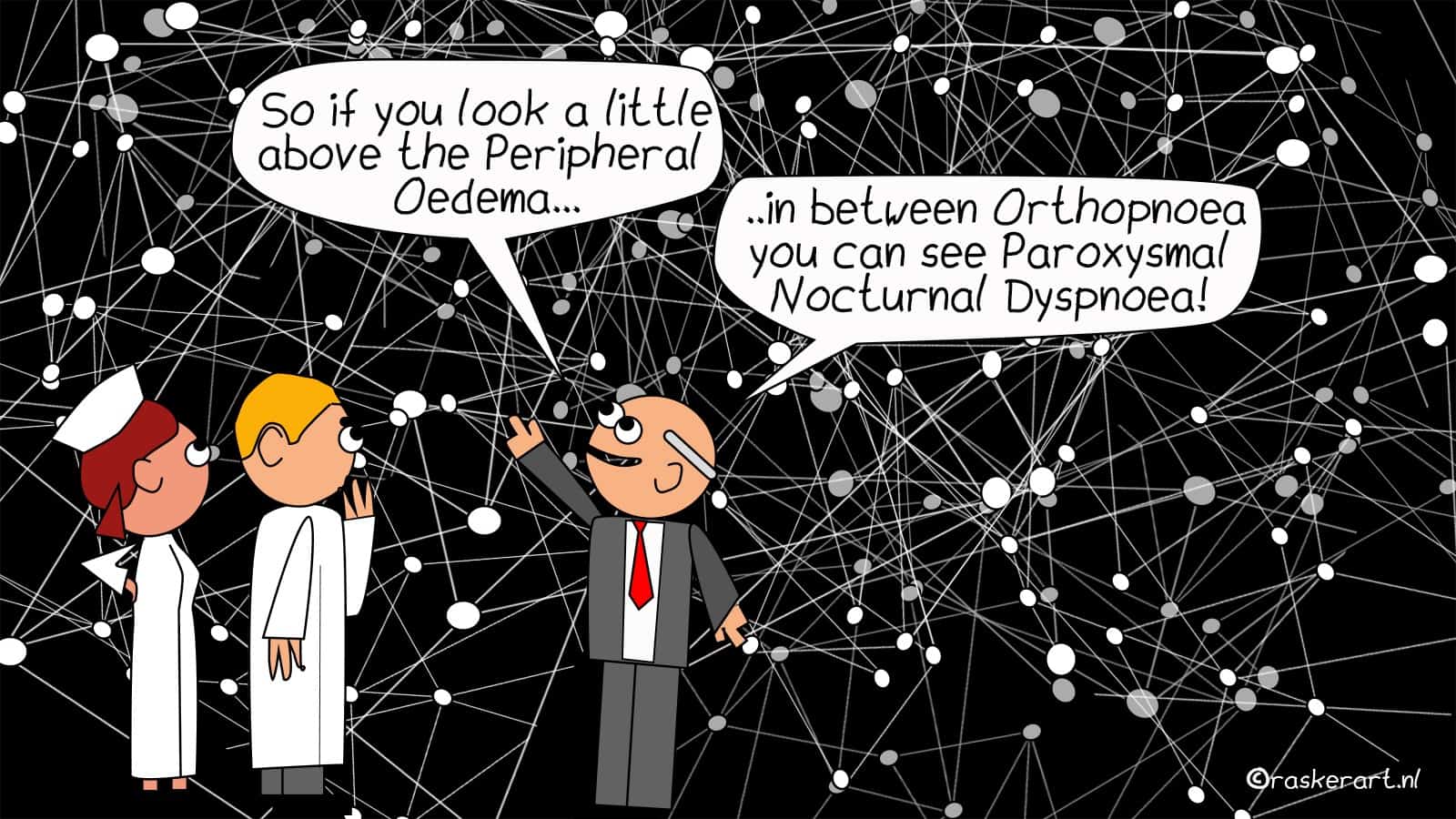
In our weekly recap on Sunday, we, as editors, look back at the past seven days. We do this at the suggestion of our cartoonist Albert Jan Rasker. He chooses a subject, makes a drawing, and we take it from there. If you received this mail from someone else, but would also like to receive it every Sunday morning, just subscribe here.
There is a computer system that can tell from MRI scans whether chemotherapy is affecting tumors. This technique is called radiomics. Although the method is proven, it is not yet being used. Doctors are reluctant because they have no idea how and why the system makes confident choices.
And we see this more often: artificial intelligence can do so much that doctors can hardly keep up with it all – with the result that many potentially valuable therapies remain on the shelf. That’s a pity, of course, but how to do something about it? “Healthcare is the slowest sector to implement innovations,” discovered researcher Merel Huisman. “An innovation of reasonable size takes an average of 20 years before it is widely used.
Her study showed that doctors who knew nothing about AI were very optimistic about this technology. However, had they accumulated a little knowledge, they tended to be negative again. “But the more knowledge they gain about AI, the more positive their view of it becomes again. Therefore, the conclusion was that we need to focus on education for doctors so that they are open to AI applications.”
Albert Jan Rasker does understand the position of those poor doctors. But colleague Wesley Klop has nevertheless begun the education process desired by Huisman. This is his article:
My personal highlight of the week is Laurens Boven’s interview with Jean-David Malo, who heads the European Innovation Council, which, with a budget of €10 billion, supports investments to make Europe less dependent on non-EU technology. What a job this man has!
Then the weekly overview. Below is a small selection of our lavish offerings from last week. Don’t fancy this editorial selection? All good, here is the complete overview of last week.
Green Team Twente builds hydrogen-powered race car – A race car that runs on green hydrogen. This is what the students of Green Team Twente to demonstrate that hydrogen is also a good alternative to drive with.
Oh, and this is fun. The article below was in last week’s newsletter, but something unusual happened. Typically, our top countries in outreach are the USA, Germany, the Netherlands, and Great Britain. Now, look at the top countries attracted by our (very serious) article about a bra made of recycled material that grows with young girls. It was mainly read in Pakistan and Bangladesh, while UAE, Malaysia, and India were also among the top countries. I don’t dare to ask why…
Bart, co-founder of Media52 and Professor of Journalism oversees IO+, events, and Laio. A journalist at heart, he keeps writing as many stories as possible.