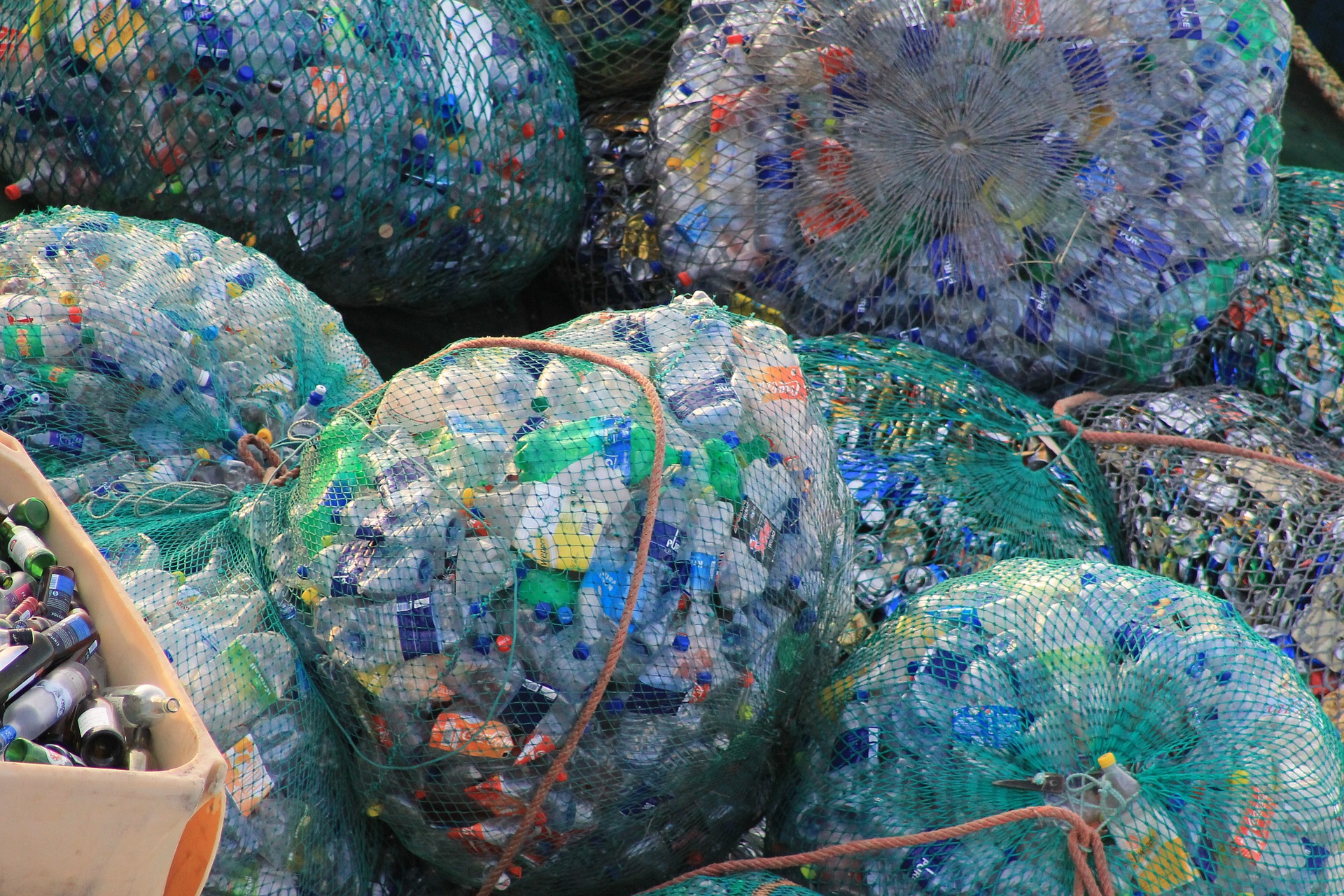
UV light from the sun slowly breaks down floating plastic in the oceans. This happens partly to invisible, floating plastic particles, but also partly to substances that can then be completely broken down by bacteria. This is the conclusion of the Royal Netherlands Institute for Sea Research (NIOZ) in a press release. The study shows that around two per cent of the plastic soup disappears every year. “That may seem little, but year on year, this breakdown by sunlight does explain a good part of the plastic soup we have lost in the oceans since the 1950s,” says lead researcher Annalisa Delre.
Artificial sun and sea
Since the mass production of plastics began in the 1950s, a significant proportion of plastic waste has disappeared into the oceans via rivers, wind or dumping from ships. To see if degradation by UV light could explain some of that vanished plastic, Delre and colleagues conducted experiments in the laboratory. In a container of simulated seawater, the researchers mixed small pieces of plastics. They then stirred that water automatically, while a lamp mimicked UV light as it beamed onto the ocean via the sun. The substances and particles created from the breakdown of plastics were captured by the researchers for analysis.
Slow degradation
The measurements showed that at least 1.7 per cent of visible microplastics are broken down by sunlight each year. Partly it breaks down into invisible nanoplastics and partly into substances that can potentially be broken down by bacteria.