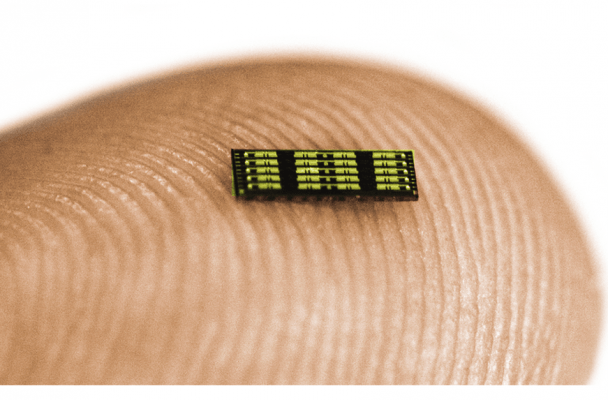
Thirty seconds of sunlight could boost the battery life of future smartwatches and other wearables by tens of minutes, thanks to a renewable and rechargeable battery prototype developed by the University of Surrey, says the university in a press release.
Surrey’s Advanced Technology Institute (ATI) has demonstrated how its new photo-rechargeable system, which merges zinc-ion batteries with perovskite solar cells, could allow wearables to spring back to life without the need to plug in.
Jinxin Bi, a PhD candidate at ATI and first author of the paper: “This technology provides a promising strategy for efficient use of clean energy and enables wearable electronics to be operated continuously without plug-in charging. Our prototype could represent a step forward to how we interact with wearables and other internet-of-things devices, such as remote real-time health monitors.”
The environmentally friendly, photo-rechargeable system is unique because of its elegant and well-matched structural design between the integrated battery and solar cell, allowing it to demonstrate high energy and volume density comparable to state-of-the-art micro-batteries and supercapacitors.
Dr Yunlong Zhao, project co-lead and expert in batteries for wearables and implantables from the ATI: “The unique features in our ultrafast photo-rechargeable system could promote wide applications in self-powered wearable internet-of-things, autonomous power systems and emergency electronics. In addition, it will broaden the perception and insight of designing the next generation of miniaturised flexible photo-rechargeable systems.”
The research was published in Energy Storage Materials.