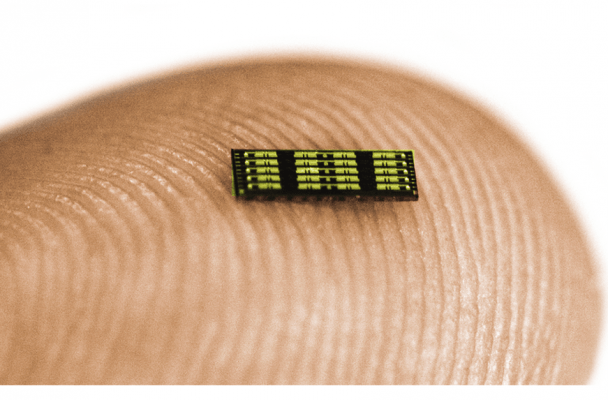
An international team of scientists, which includes members of the University of Cambridge, developed a new mini-miniature spectrometer that works without the need to visit the lab. The artificial intelligence programmed device has a record-breaking resolution, which can be utilized for analyzing food toxicity, cancer imaging, and investigating outer space, writes the university in a press release.
Spectrometers are generally used to analyze and detect certain substances and traces in light our eyes cannot see. However, the current versions of these gadgets do not possess either high resolution or good portability. Typically, spectrometers have a heavy configuration due to filter and dispersing light, but new adaptations are trying to shrink the design without losing resolution.
The future of spectrometers
Researchers decided to fix those limitations with AI technology, designing a smaller and higher-quality alternative spectrometer. Artificial intelligence is a vital component of this “computational” spectrometer, compensating for increasing noises after removing the optical elements.
One of the most important innovative aspects of the miniature spectrometer is the potential to detect light in the infrared range, providing an adequate resolution of elements while analyzing nuances within the light.
As mentioned in the study’s results, other features of the spectrometer range from surveillance of smart agriculture to the capability of performing biochemical analyses. Since the device can be incorporated into drones and phones, scientists expect a “myriad of markets” for it.