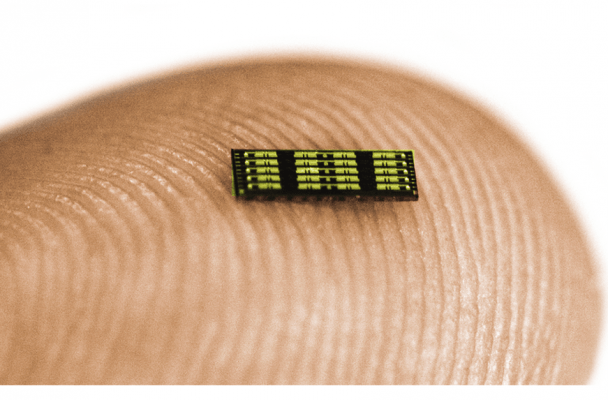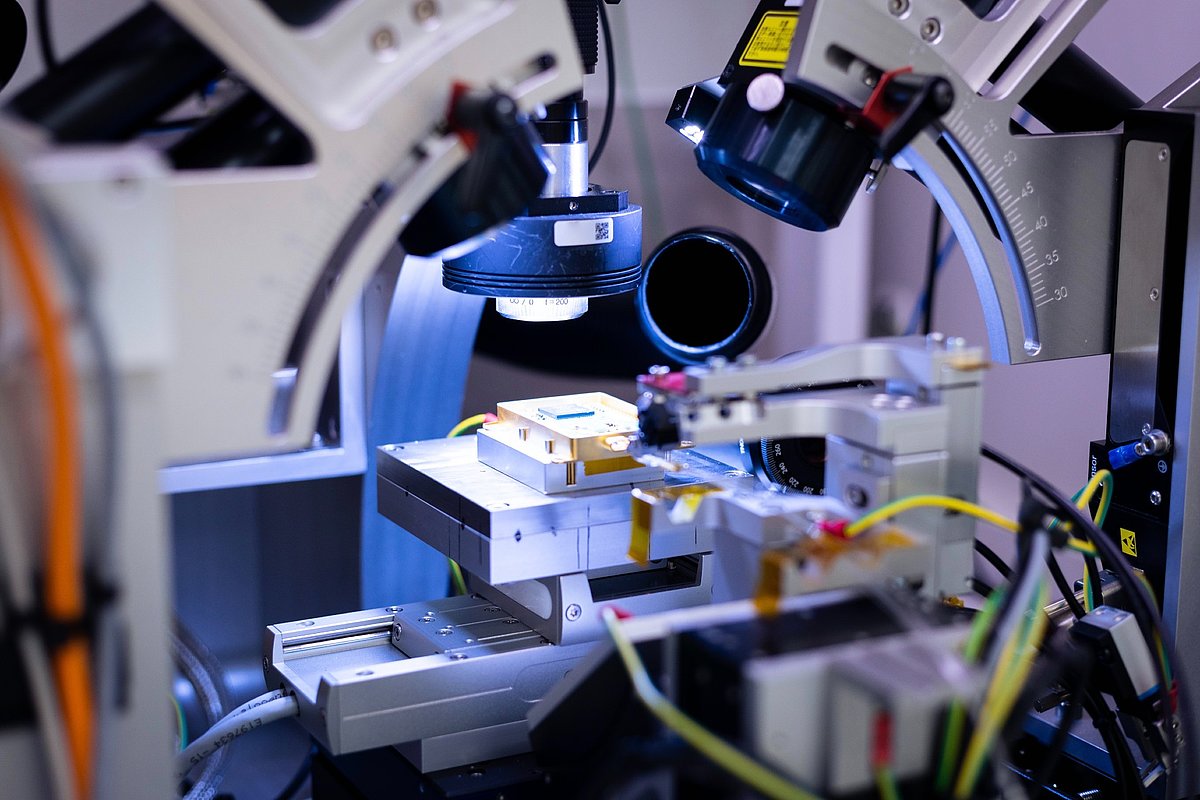
Scientists at the University of Twente have developed a new technique to effectively trap soundwaves and light. With this experimental method, the research team has added a new solution to the ‘photonic toolbox’, says the university in a press release.
In recent decades, chips and electronic devices have become exponentially smaller and faster. We have nearly reached the limits of ‘traditional’ electronics and are now in the process of transitioning from electronics to photonics; using light instead of electrons. At this scale, all kinds of new challenges arise. For example, the smallest interferences or quantum effects can distort signals and render them unusable. Developments in the field of photonics are rapidly following one another. Innovation Origins has written about this before. Read all articles here.

No acoustic leakage
The research team at the University of Twente has used low-loss multilayer silicon nitride (Si3N4) nanophotonic circuits to confine both the optical and the acoustic waves. These circuits consist of 50 cm-long spiral waveguides. This setup traps the soundwave and prevents the acoustic leakage that occurs when using a single silicon nitride core. Besides promising results in their experimental setup, the researchers produced a working proof of concept.
The research paper was published in Science Advances magazine.