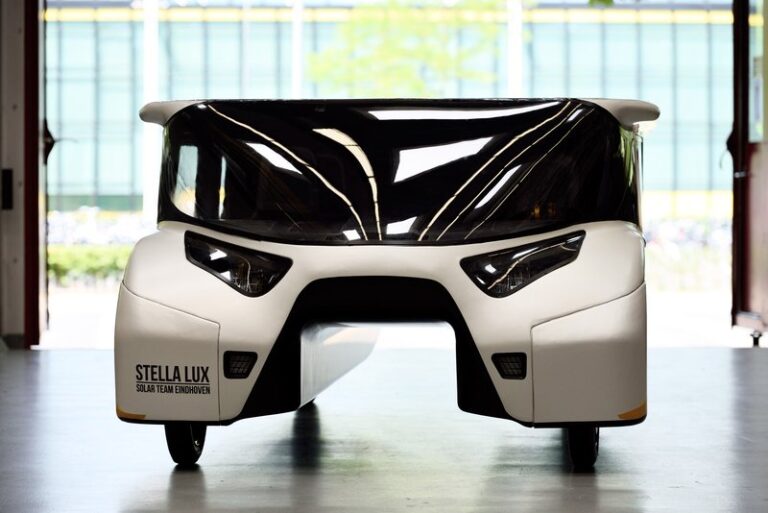
An international consortium will explore the potential of solar-powered vehicles and their impact on future policies and regulations for electric charging infrastructure in Europe. The partnership is called SolarMoves and, in addition to TNO, includes the Fraunhofer Institute for Solar Energy Systems ISE, Sono Motors and IM Efficiency, says TNO in a press release.
The EU and its member states have ambitious goals to achieve an emission-free mobility system in the next decade. This will require significant investments in car charging infrastructure. The application of solar technology in and on electric vehicles may be a possible solution here. In fact, previous research has shown that solar panels on electric cars can reduce their need for charging by about 25 percent on an annual basis. In sunny areas, this reduction can even reach 40 percent.
Growing market
By 2030, electric cars with solar panels could constitute an estimated 10 percent of the entire market. Several cars with solar cells are under development. In addition, more than 30 trucks are already driving around Europe with solar cells on the roofs of their trailers, making commercial transport more sustainable thanks to solar energy. Furthermore, city buses are already equipped with solar cells to reduce emissions and fuel costs.
Various vehicles
A three-year pilot is being conducted in which models will be combined and verified through monitoring and road tests. Solar panels will be integrated into various vehicles (cars, trucks, buses and vans). The vehicles will also be equipped with sensors to measure and determine solar radiation under real conditions across Europe.
The results should provide insight into improving the efficiency of electric vehicles with integrated solar technology. On this basis, they aim to determine the integral potential of this technology and predict what charging infrastructure would be required if a significant proportion of all electric cars were equipped with solar technology in the coming years. The findings will eventually be translated into a set of policy recommendations for the European Commission.