Researchers at the Italian Institute of Technology (IIT) created a new soft robot inspired by the biology of earthworms. The robot is the starting point for developing devices for underground exploration, but also search and rescue operations in confined spaces and the exploration of other planets writes the IIT in a press release.
Nature offers many examples of animals, such as snakes, earthworms, snails, and caterpillars. They all use both the flexibility of their bodies and the ability to generate physical traveling waves along the length of their body to move and explore different environments. Some of their movements are also similar to plant roots.
Taking inspiration from nature and revealing new biological phenomena while developing new technologies is the primary goal of the BioInspired Soft robotics lab coordinated by Barbara Mazzolai, and this earthworm-like robot is the latest invention coming from her group.
Movement mechanics
The creation of an earthworm-like robot was made possible through a thorough understanding and application of earthworm locomotion mechanics. They use alternating contractions of muscle layers to propel themselves both below and above the soil surface. The individual segments of their body (metameres) have a specific quantity of fluid that controls the internal pressure to exert forces and perform independent, localized, and variable movement patterns.
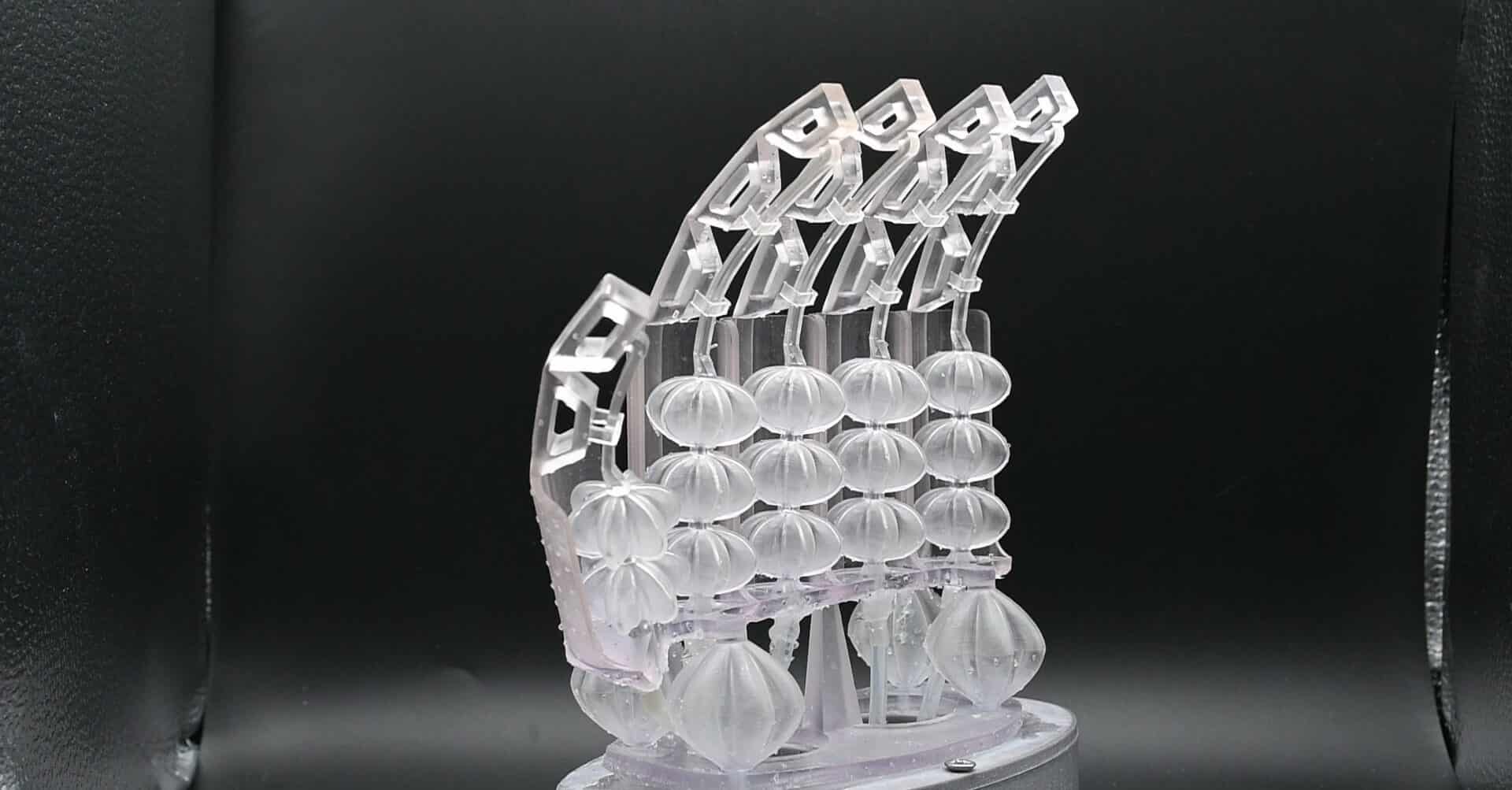
The team developed a peristaltic soft actuator (PSA) that implements the antagonistic muscle movements of earthworms. From a neutral position, it elongates when air is pumped into it and compresses when air is extracted from it. The entire body of the robotic earthworm is made of five PSA modules in series, connected with interlinks. The current prototype is 45 cm long and weighs 605 grams.
Earthworm robot locomotion
Each actuator has an elastomeric skin that encapsulates a known amount of fluid, thus mimicking the constant volume of internal coelomic fluid in earthworms. The earthworm segment becomes shorter longitudinally and wider circumferentially and exerts radial forces as the longitudinal muscles of an individual stable volume chamber contract. Antagonistically, the segment becomes longer along the anterior–posterior axis and thinner circumferentially with the contraction of circumferential muscles, resulting in penetration forces along the axis.
In order to propel the robot on a planar surface, small passive friction pads inspired by earthworms’ setae were attached to the ventral surface of the robot. The robot demonstrated improved locomotion with a speed of 1.35mm/s.