Doctors and researchers at the University of Southampton are trialling a novel implant device they have developed that may be offered to women who have problems conceiving or who have recurrent miscarriages.
A small sensor device, invented at the University by Professor Ying Cheong, a reproductive medicine specialist, and bioelectronics engineer Professor Hywel Morgan has the potential to monitor the environment inside the womb and detect any activity that could have an impact on embryo development. The device is now being developed by Oxford-based women’s health company Verso Biosense,writes the University of Southampton in a press release.
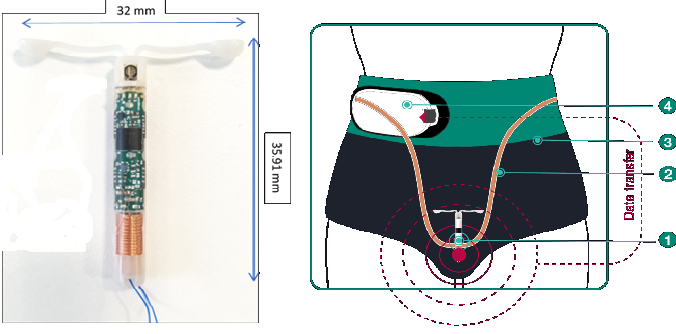
The system consists of three main components: the device, a data receiver, and an undergarment that holds the receiver.
Keeping track of all parameters
The sensor device is the same shape and size as the contraceptive coil, although it is not a contraceptive, and is inserted into the womb in a clinic.
It then monitors the uterus temperature, dissolved oxygen and pH levels – all features which can affect embryo development – continuously and transmits the data wirelessly to the receiver every 30 minutes. Clinicians would then able to assess the findings and establish interventions which could help address any anomalies.
Professor Cheong and her team are currently inviting women to enter into this study. Volunteers must be aged between 18 and 42 and do not need to have a history of infertility or miscarriages.
“Our team hope that this is the very first step in the better understanding of the womb environment that would lead to better monitoring and treatment of infertility and recurrent miscarriages,” said Professor Cheong.
How does it work
The system consists of 3 main components, the IUMD (1), the garment, (3) and the data receiver (4)
The IUMD (1) is a sensor device that has the same shape and size as the contraceptive coil (although not a contraceptive) and is inserted into the womb by the clinician in the clinic. Your doctor will explain the process to you before you are due to have this device inserted.
The sensor monitors the uterus temperature, dissolved oxygen and pH levels continuously and transmits the data utilising the aerial (2) to transfer the data to the receiver (4).
Also interesting: Influencing uterine waveforms makes getting pregnant easier