A crisis such as COVID-19 calls for robust measures. The European Commission created the Recovery and Resilience Facility, which is comprised of over € 723.8 billion in grants and loans. To claim a share of this budget, member states had to present a plan of reforms and investments to foster the digital and green transition. In Decarbonizing Europe, we analyze and compare the different plans. What are countries spending the money on, what is their strategy and how are they tackling the climate crisis? This week: Italy.
“The national plan for the corona recovery fund makes investments possible that would have otherwise been impossible, unthinkable, until just days ago,” Italian PM Mario Draghi stated when presenting the plan to parliament. Italy is the country benefiting the most from the RRF, as it is receiving €191.5 billion – €68.9 billion in grants and €122.6 billion in loans.
Housing renovation as a spearhead
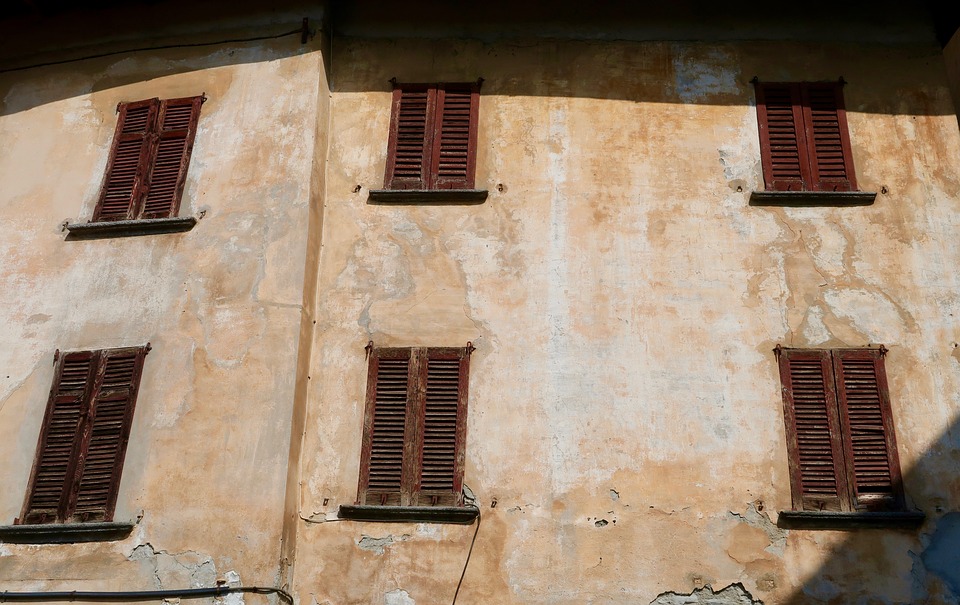
The largest investment that Italy is planning involves the renovation of residential buildings. The government is allocating about €14 billion for the tax scheme aimed at stimulating these renovation plans. In addition, another €6 billion will be invested in improving the energy efficiency of public buildings, which means that the renovation of buildings accounts for about 10 percent of the plan.
According to a 2020 report by the Italian National Agency for New Technologies, Energy and Sustainable Economic Development (ENEA), over 60% of real estate falls into the F and G energy classes – the least efficient ones. The ENEA report does show that the number of buildings with a high level of energy performance is on the rise. However, given that the majority of buildings were built between 1945 and 1976, they do not meet today’s standards.
“All the buildings being financed through this measure must improve their overall energy performance by at least two energy classes,” Salvatore Marceddu explains. He is one of the engineers who has been working on several renovations.
The government’s goal is to renovate over 100,000 buildings by 2026, thereby reducing CO2 emissions by 667 Kilotonnes.
Read more: Billions for a greener Italy, but will Draghi manage to spend the EU money this time?
Nurturing renewables
As far as the use of renewable energy sources is concerned, Eurostat’s 2019 measurements revealed that 18.8 percent of the energy consumed in Italy came from green sources (US 11 percent).
Specifically, only about 9 percent of the total energy used in the transport sector is renewable. To improve this figure, more than €3.5 billion will be invested in the purchase of buses and trains that run on electricity or hydrogen, and in the construction of charging stations.
Another €2 billion is destined for hydrogen in ‘hard-to-abate sectors.’ These are sectors where alternative forms of sustainable energy are difficult to implement. However, this will not happen overnight. Firstly, the Italian government must approve a law regulating the technical aspects surrounding hydrogen, namely production, transportation and storage. Secondly, another reform has to deal with promoting the production and consumption of hydrogen.
Among the projects financed, room has also been made for the development of agrovoltaics. This investment aims to cut down CO2 emissions by 0.8 million tons. The Italian government plans to do this by installing production facilities capable of producing 1.3 GWh of renewable energy every year.
Faster connections and innovation investments
Italy lags behind when it comes to fast internet connections. According to Eurostat figures, only 33.7 percent of households had high-capacity internet connections in 2020. To foster the widespread roll-out of high-capacity networks, €6.7 billion has been allocated to 5G and fiber optic systems. The investment aims to bring 5G coverage to the whole country, provide schools and hospitals with 1 Gigabit broadband connectivity, and set up even the smallest islands with ultrafast connections.
Also interesting: Easing the way towards fiber optics
Over €1.5 billion will be used to establish a fund to create a network of research and innovation infrastructure. A minimum of 30 projects that must meet EU benchmarks for greenhouse emissions will be financed. The aim here is to bring academic knowledge into companies.
Of that, €300 million has been allocated to start-ups. Companies that are active in the field of fossil fuels are not allowed to participate. For the remaining companies, their emissions must be below European standards. In addition, any company polluting the environment over the long term will not be included in the funding.
Being green costs money and effort
“The main concern is about the costs involved in the green transition. We all want to be more sustainable and have a smaller carbon footprint on the environment. But these conversions come at a high cost”, Luciano Monti stresses. He is a professor of European Union Policy at LUISS University in Rome.
“Polluting companies need to switch to greener energy. But to do that, they have to replace their existing energy sources. You also have to teach your employees to do other kinds of work, preferably without having to fire anyone. The circular economy is great, but we need to help companies invest in it,” Monti adds.
Italy received about €25 billion in pre-financing last summer. By the end of June, the country must reach 45 targets and milestones to qualify for the second installment. As the government enters the final year of its term in office, meeting these targets is critical to keep the transition going forward.
Read previous installments of the series here.